How to paint doors, casing and baseboards yourself: step by step
Short answer
To paint doors, casing and baseboards, follow the 7 steps below, from “Doors: take them off the hinges and lay them flat on sawhorses” to “Brush on enamel in thin coats, along the length”. Difficulty 2 of 5; for a first-timer, plan on about half a day. Stop if the building is from before 1978 and you would sand or scrape old trim or doors without a negative lead test — do not dry-sand, heat-strip, or power-sand them; wet-sand lightly or hire an RRP-certified painter.
Draft guide written from standard practice, not yet reviewed by a licensed pro. Follow product labels where they differ.
Enamel on trim, thin coats, after the trim is installed and caulked.
Difficulty 2 of 5 · about half a day · you can do this
Photo of your room, the look you pick, then this guide with the materials counted for your room.
What you need
- Trim enamel, semi-gloss or satin
- Trim enamel for doors (1 qt per door, both sides, two coats)
- Acrylic latex caulk (paintable)
- Painter's tape 1.5"
Tools
- 2–2.5" angled brush
- Caulk gun
- Sawhorses (for doors)
- Screwdriver (hinges and knobs)
- Spackle or wood filler + putty knife
- Sanding sponge, 220 grit
- Cotton balls and rubbing alcohol (oil or latex test)
Step by step
Step 1 of 7
Doors: take them off the hinges and lay them flat on sawhorses
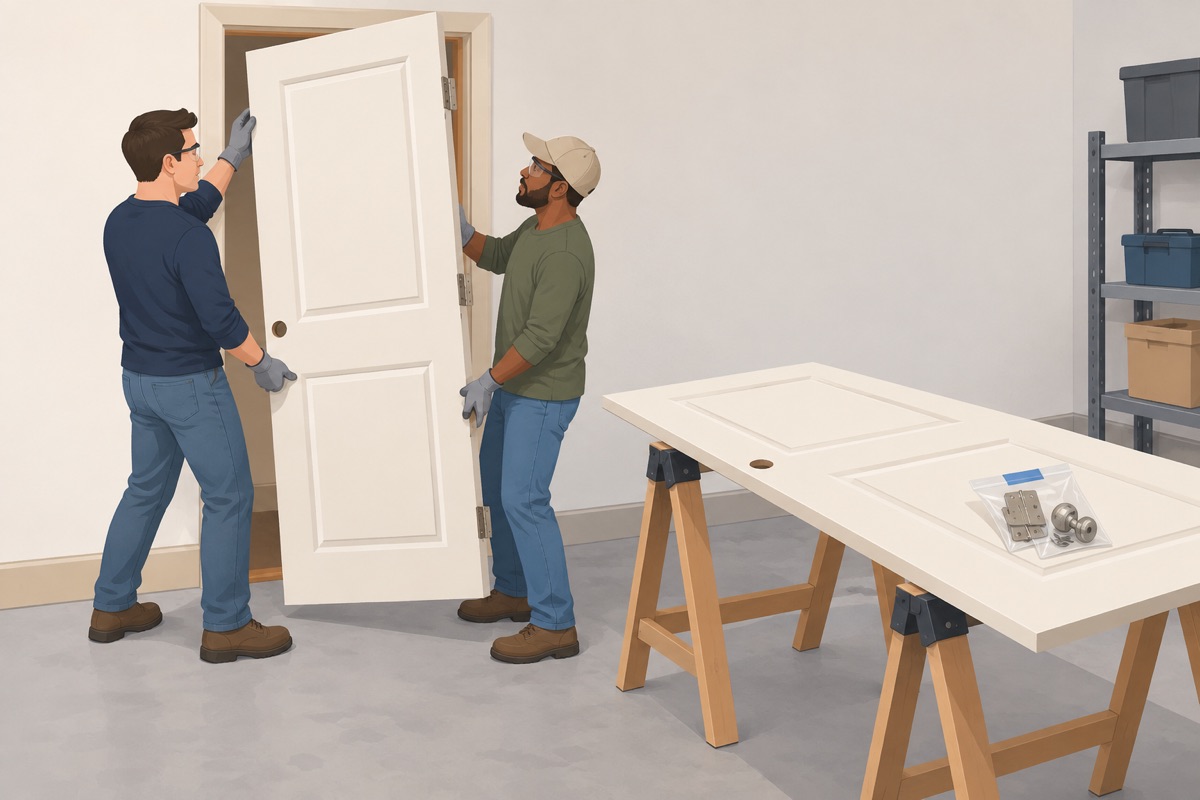
When doors are part of this job: take them off the hinges, remove knobs and hinges, label them, and lay the doors flat on sawhorses. They get the same prep and coats as the trim, painted flat so nothing drips: panels, then rails, then stiles. No doors in this job: only the lead check below applies here.
Before you sand old trim or doors
- Building is from 1978 or later, OR a lead test (EPA-recognized kit) on the old trim and doors is negative, OR you will only wet-sand them lightly — no dry-sanding, scraping, heat-stripping, or power-sanding
Step 2 of 7
Check whether the old trim paint is oil or latex
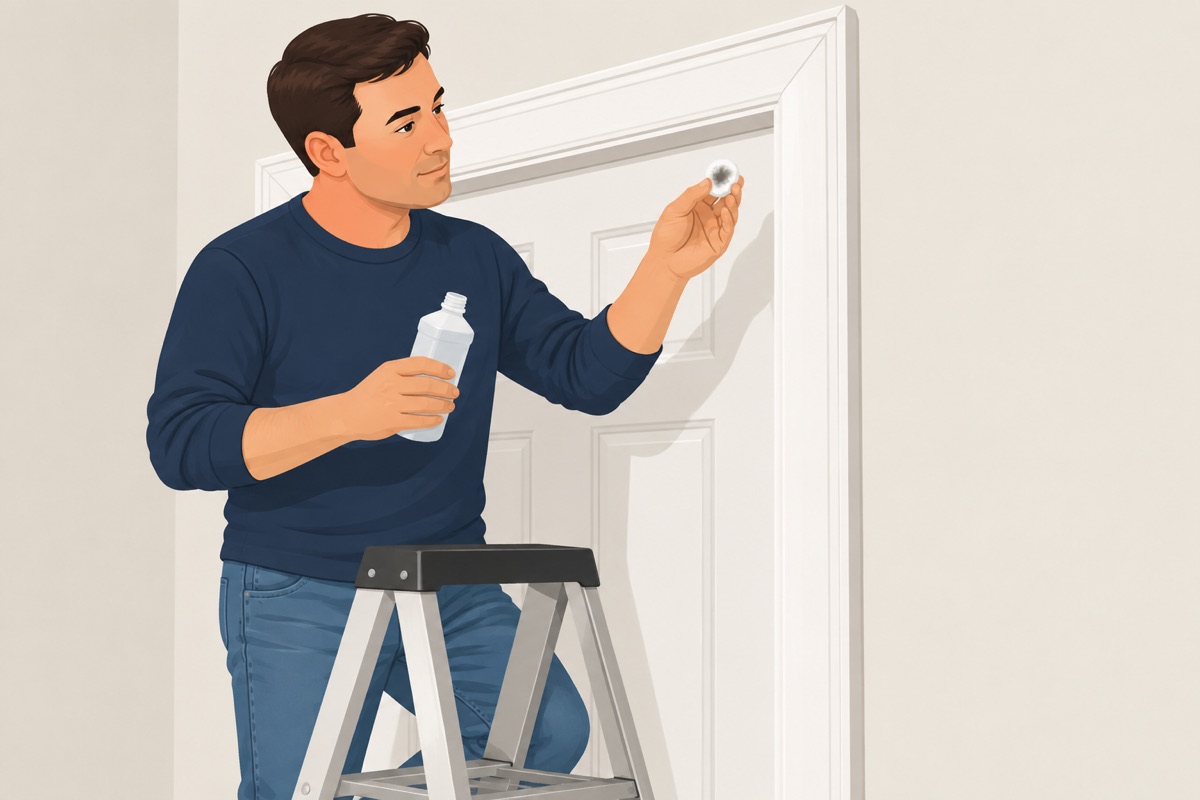
Rub the trim with a cotton ball and rubbing alcohol: if paint comes off, it is latex; if not, it is likely oil — scuff-sand and use a bonding primer before latex.
Step 3 of 7
Fill the nail holes and sand flush
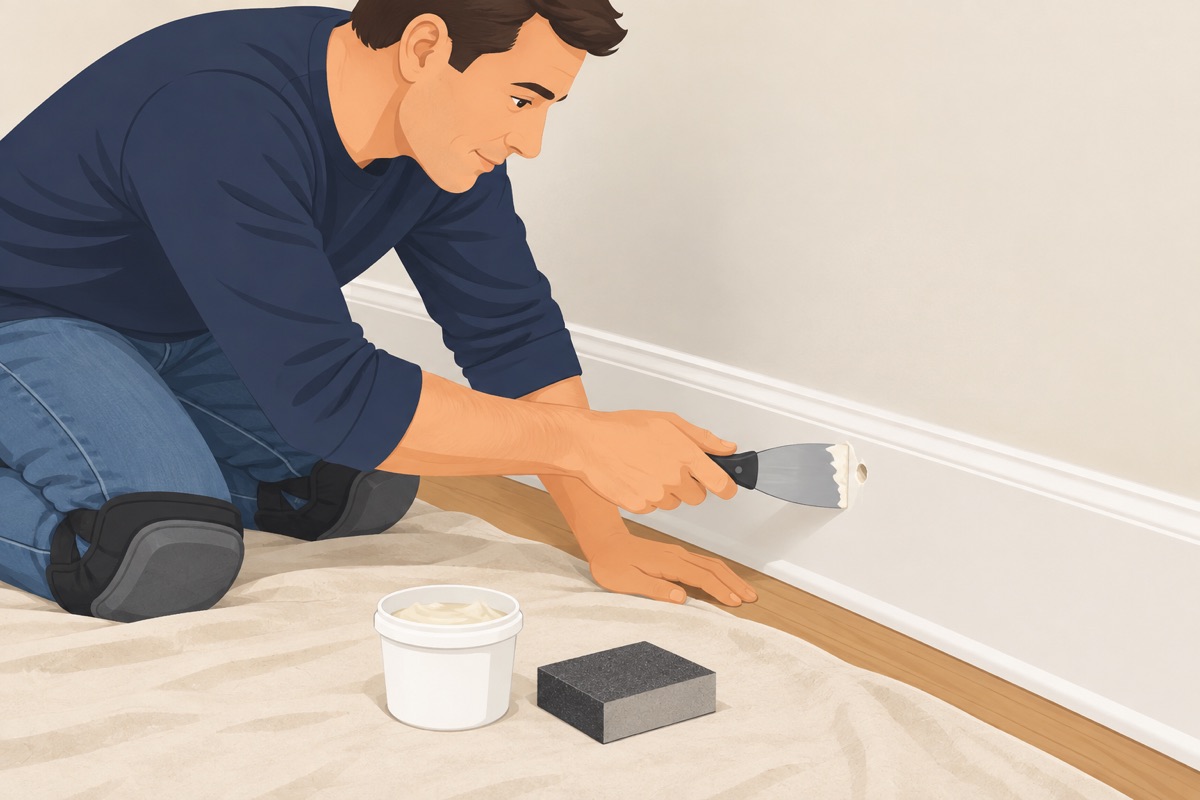
Fill nail holes with spackle or wood filler, let it dry per the label, and sand flush.
Step 4 of 7
Prime bare wood and MDF, scuff old gloss
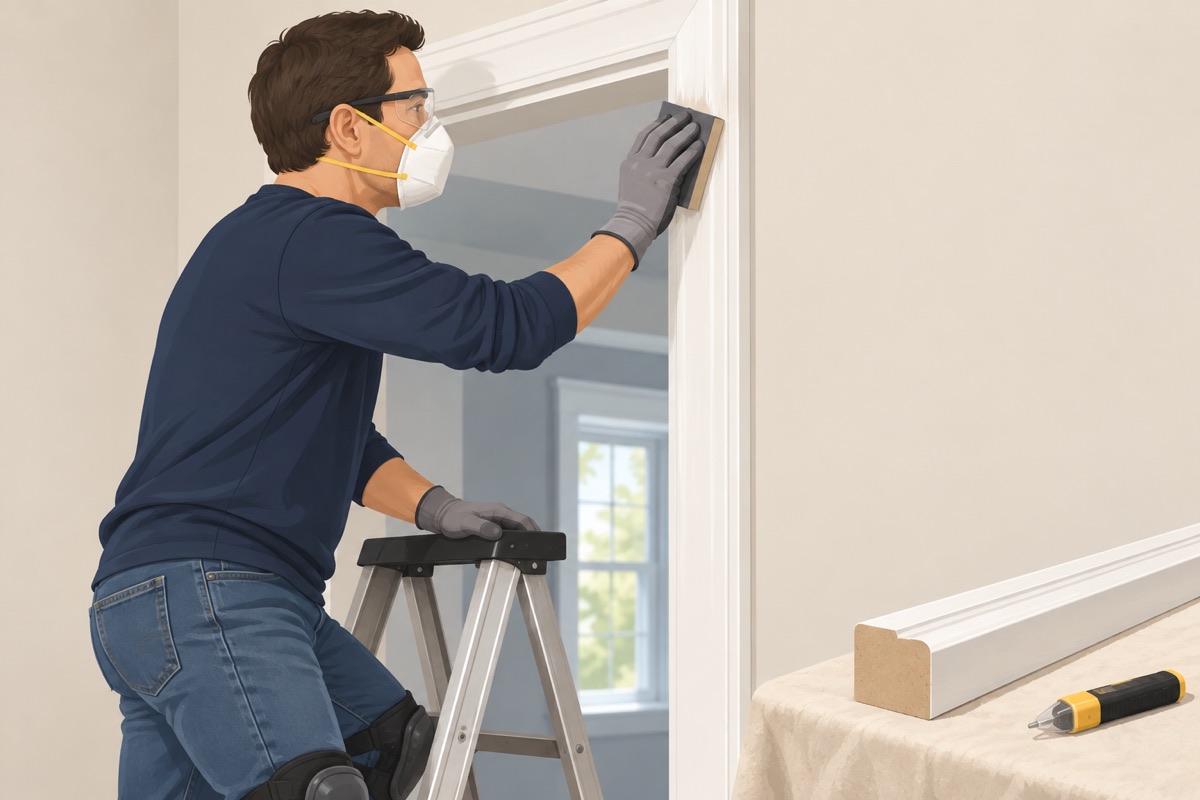
Bare wood or MDF edges: prime with the primer the enamel can names. Scuff-sand old glossy trim with 220 grit and wipe it off.
Step 5 of 7
Tape the wall along the baseboard and casing
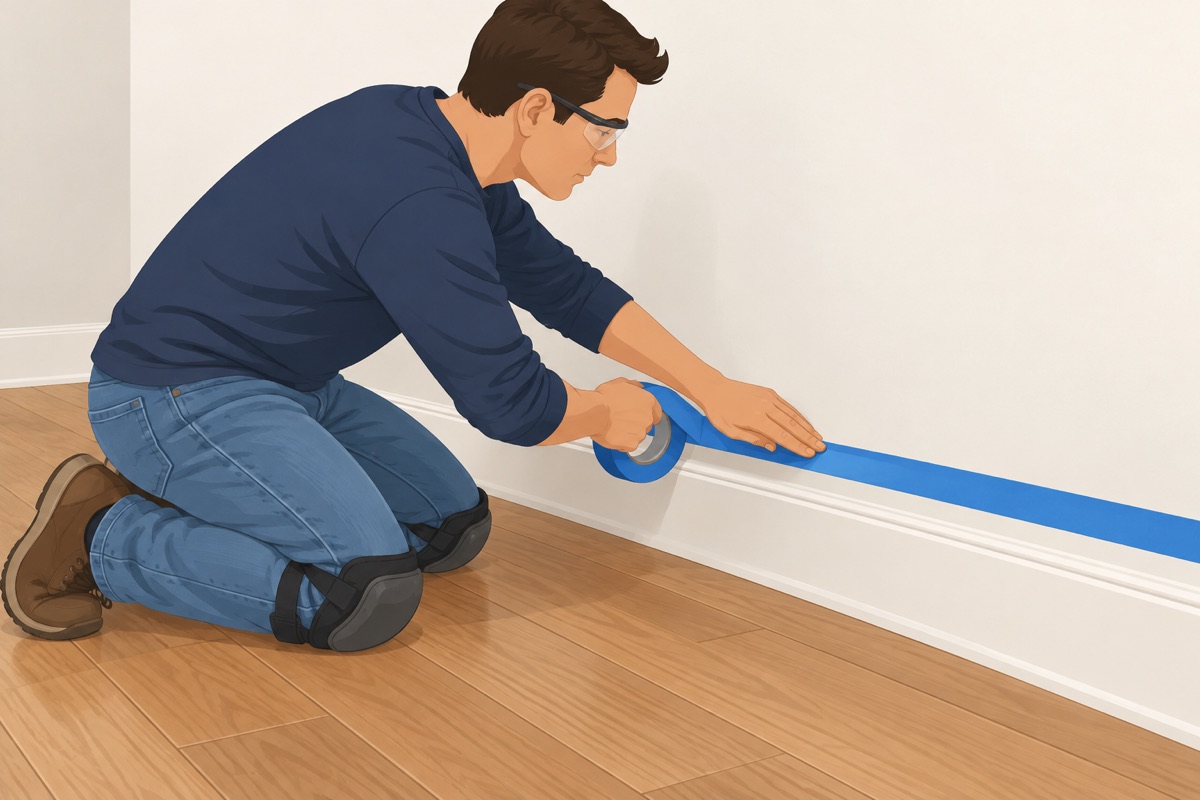
Tape goes on the wall, not on the trim.
Step 6 of 7
Check the caulk from the fill-and-caulk job
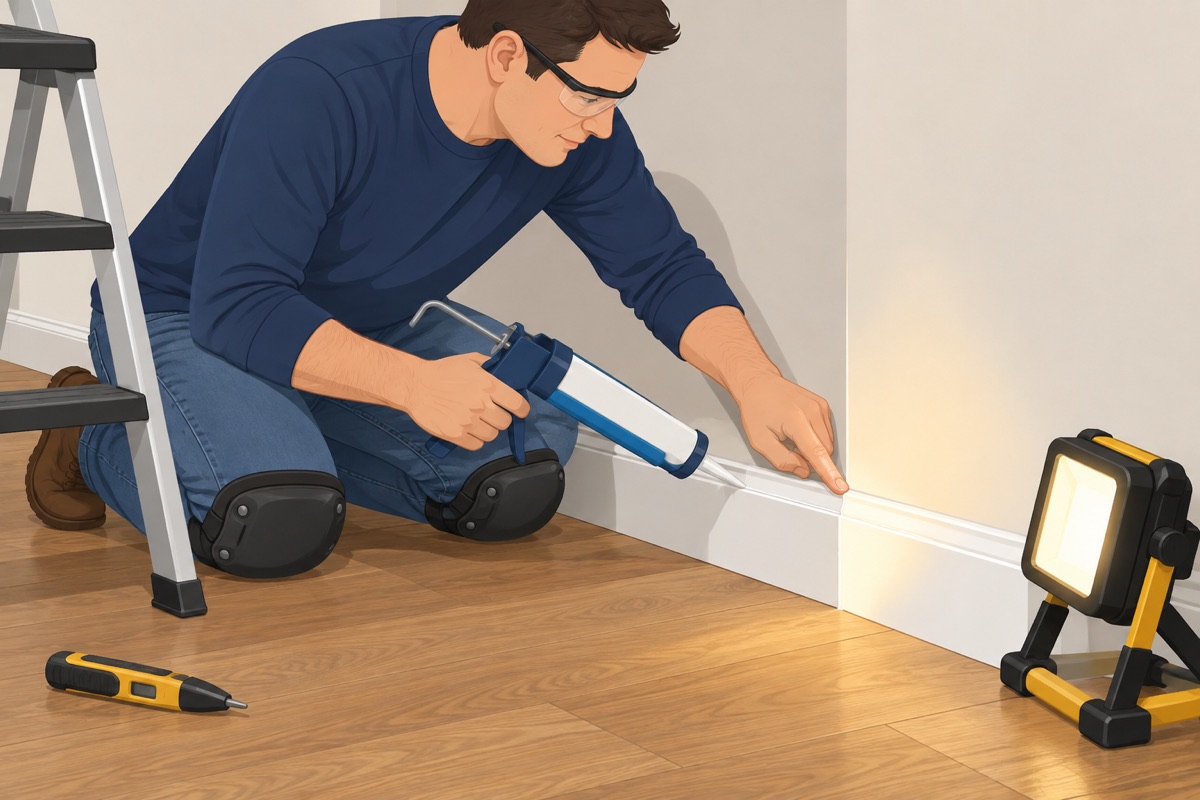
The trim was caulked in its own job. Walk it with a light: fill any joint that opened or was missed with a short bead, smooth it with a wet finger, and let it dry the paint-ready time on the tube. Without this there is a dark gap along the whole baseboard.
Step 7 of 7
Brush on enamel in thin coats, along the length
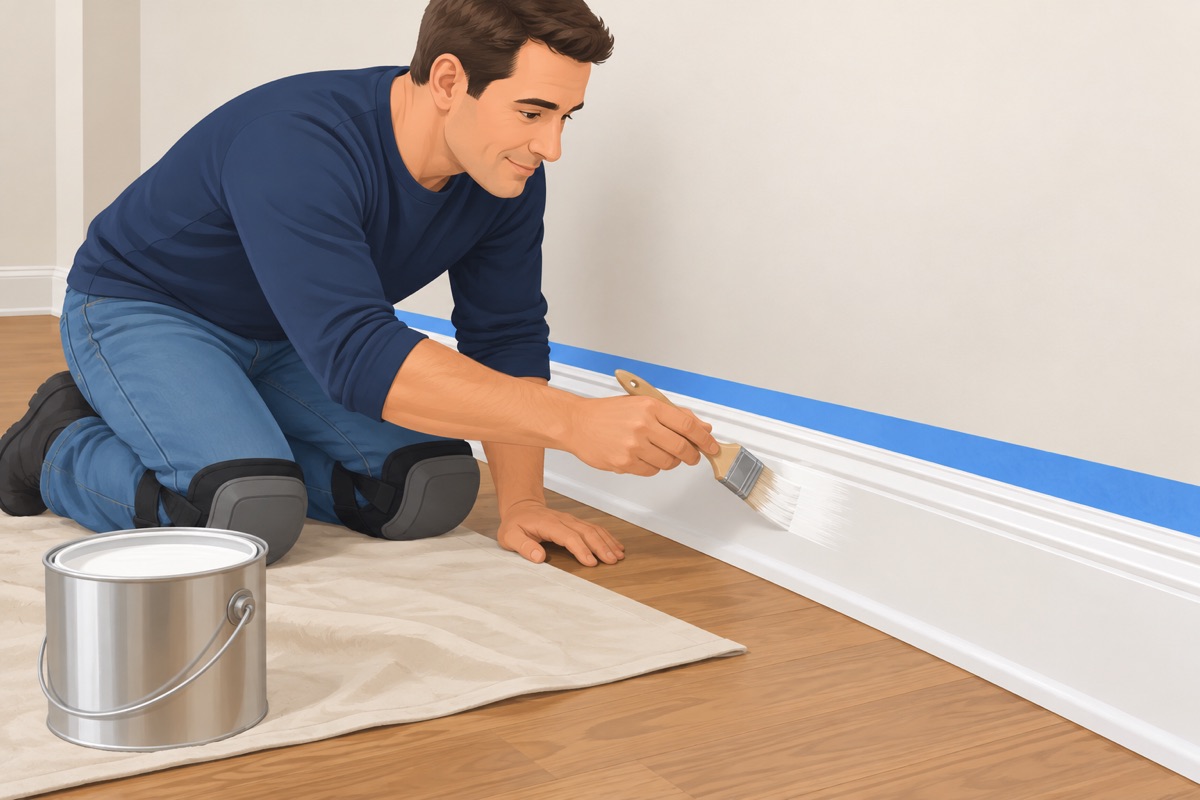
Two thin coats, recoat time per the can; sand lightly with 220 grit and wipe between coats. Pull the wall tape as soon as the last trim coat is done.
Common mistakes
- Painting the baseboard before caulking. A dark gap along the whole baseboard. Caulk the joint, let it dry, then paint.
- Thick enamel coat. Drips, and it stays soft for weeks. Thin coats, along the length.
Questions
How long does it take to paint doors, casing and baseboards?
Difficulty 2 of 5. For a first-timer, plan on about half a day.
What do I need to paint doors, casing and baseboards?
Trim enamel, semi-gloss or satin, Trim enamel for doors (1 qt per door, both sides, two coats), Acrylic latex caulk (paintable), Painter's tape 1.5". Tools: 2–2.5" angled brush, Caulk gun, Sawhorses (for doors), Screwdriver (hinges and knobs), Spackle or wood filler + putty knife, Sanding sponge, 220 grit.
What are the most common mistakes when you paint doors, casing and baseboards?
Painting the baseboard before caulking. A dark gap along the whole baseboard. Caulk the joint, let it dry, then paint. Thick enamel coat. Drips, and it stays soft for weeks. Thin coats, along the length.
When should I stop and call a pro?
Stop if the building is from before 1978 and you would sand or scrape old trim or doors without a negative lead test — do not dry-sand, heat-strip, or power-sand them; wet-sand lightly or hire an RRP-certified painter.