How to plan a yard project: 811, property line, permits yourself: step by step
An evening of checks that saves the whole project: what is buried, where your land ends, what your city allows, and which way water runs. Nothing here is hard, and all of it comes before the first shovel.
Difficulty 1 of 5 · about half a day · you can do this
Photo of your room, the look you pick, then this guide with the materials counted for your room.
What you need
- Wood grade stakes
- Mason's line (braided nylon)
- Marking paint (upside-down spray)
- 100 ft tape measure
Tools
- Tape measure
- Stakes, mason's line and a line level
- 4 ft level
- Phone camera
- Metal detector (to find survey pins) — Borrow or rent one; a cheap one finds a buried pin.
Step by step
Step 1 of 9
Photograph the yard as it is
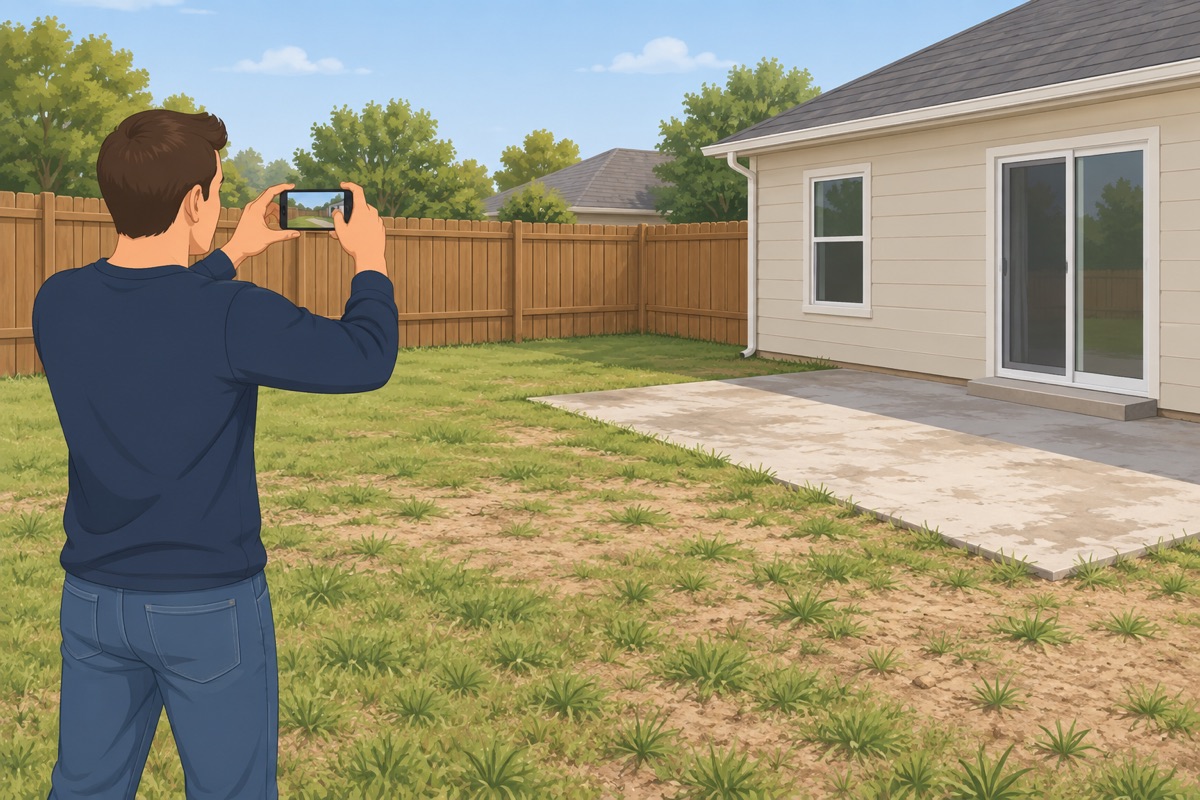
Stand in each corner and take a wide photo toward the opposite side, then photos of the house wall, the fence lines and anything you plan to remove. These are your 'before' photos and your record of what was there.
Step 2 of 9
Call 811 before any digging
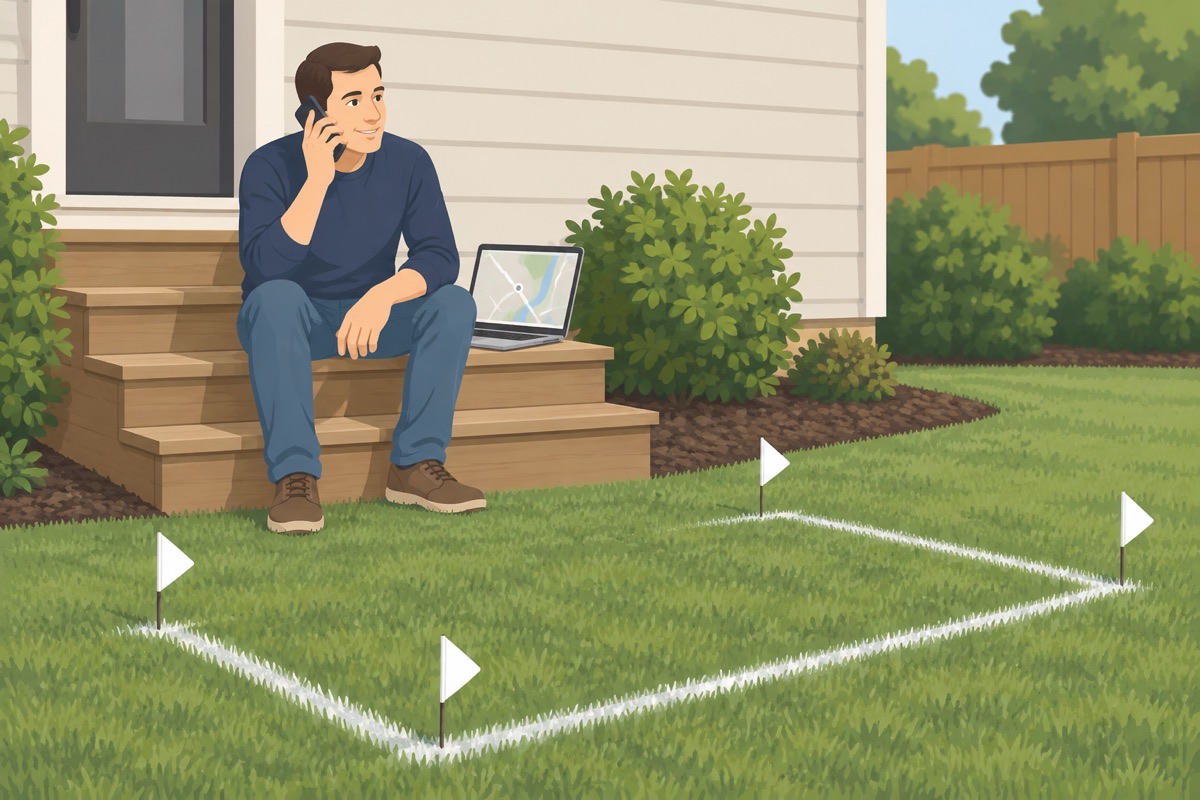
811 is free and required nationwide before you dig — even for a post hole, a sod bed or a long stake. Call or file online a few working days ahead; your state sets the exact wait and how long the ticket lasts. Mark the area you plan to dig with white paint or flags if your 811 center asks for it. The utilities send locators who paint or flag their lines; the ticket lists who was notified. 811 does not mark lines you own: a line to a garage or shed, sprinklers, a gas line to a grill or a pool heater — find those yourself or hire a private locator.
Before any digging in this yard
- 811 ticket filed and its number written down
- Every utility on the ticket has marked its lines or answered 'clear'
- You know where your own private lines run (sprinklers, a line to a shed, a gas line to a grill), or you had them located
Step 3 of 9
Find the property line and easements
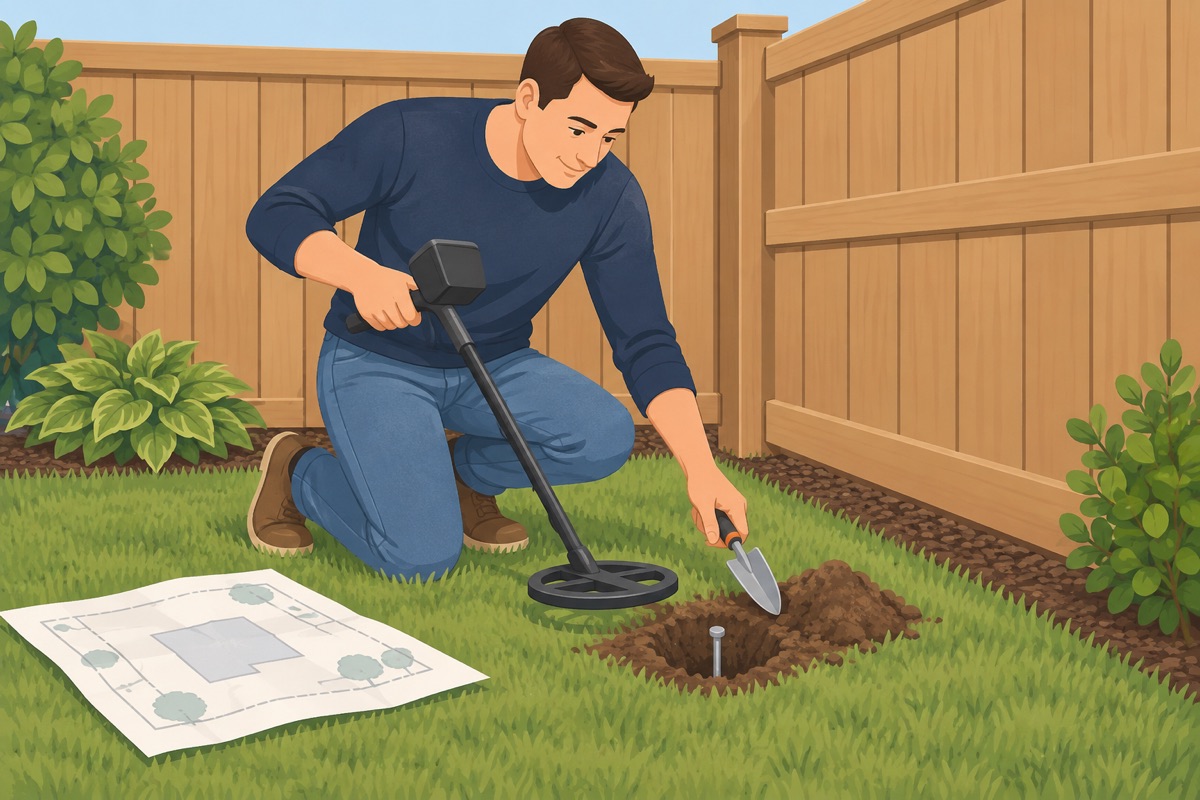
Look for survey pins (metal rods at the corners, often under a few inches of soil — a metal detector helps), the plot plan from your county, or your title papers. Easements — a strip a utility or a neighbour has rights to — are on the same papers; do not put a patio, deck or pergola on one without asking. If a fence or structure will sit near the line and nothing is certain, hire a licensed surveyor.
Step 4 of 9
Check your city's and your HOA's rules

Call or search your city's building and planning department for fence height limits (often lower in the front yard than in back), setbacks from the property line, and which jobs need a permit. Common permit triggers — check with your city: a fence over 6 ft, a deck or platform more than 30 in above the ground, a pergola or patio cover over a size limit, a retaining wall, and any new electrical circuit or outlet. If you have an HOA, read its rules for fences, colors and structures and get written approval before you buy anything.
Step 5 of 9
Find which way the water runs
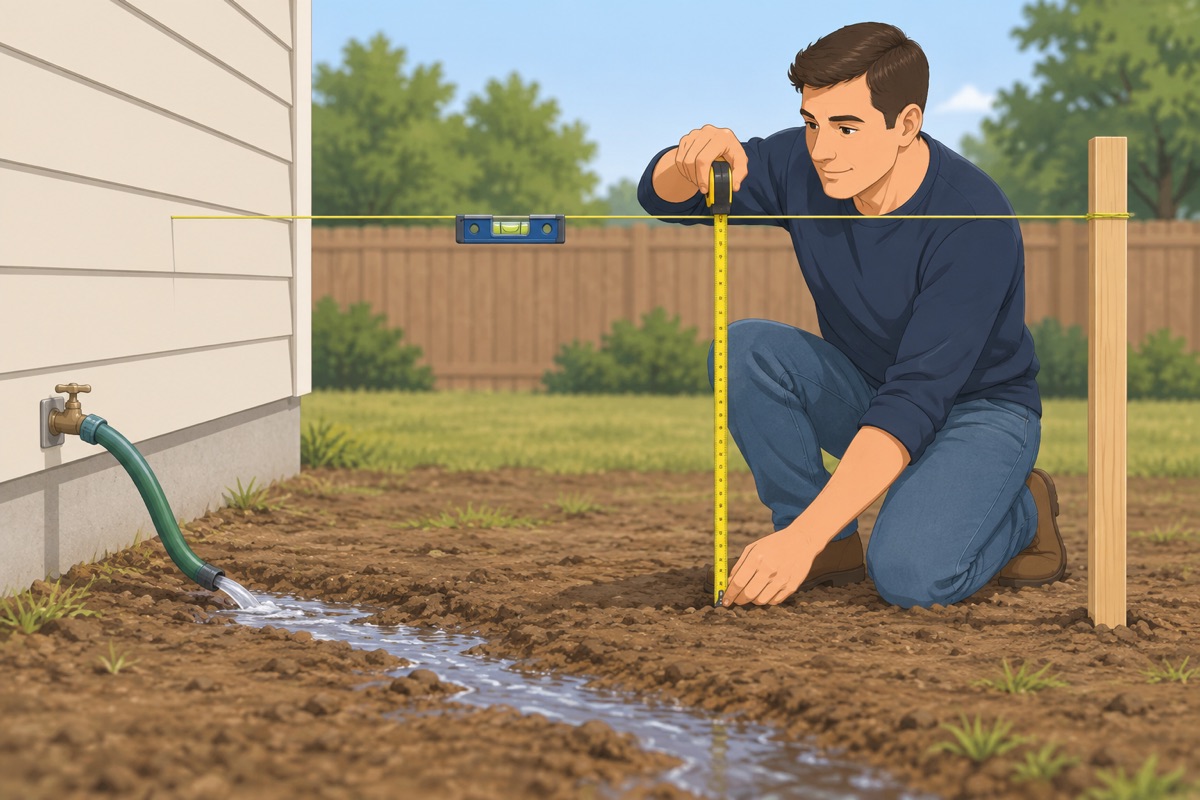
Run a hose on the ground near the house for a few minutes, or look after a rain, and watch where the water goes. Then measure the fall: tie a string from a stake at the house to a stake 10 ft out, level it with a line level, and measure from the string down to the ground at the far stake. A patio needs 1/8–1/4 in of fall per ft away from the house; the soil right next to the foundation usually needs more (codes often ask for 6 in in the first 10 ft — check with your city).
Step 6 of 9
Mark the faucet, the outlet and the downspouts
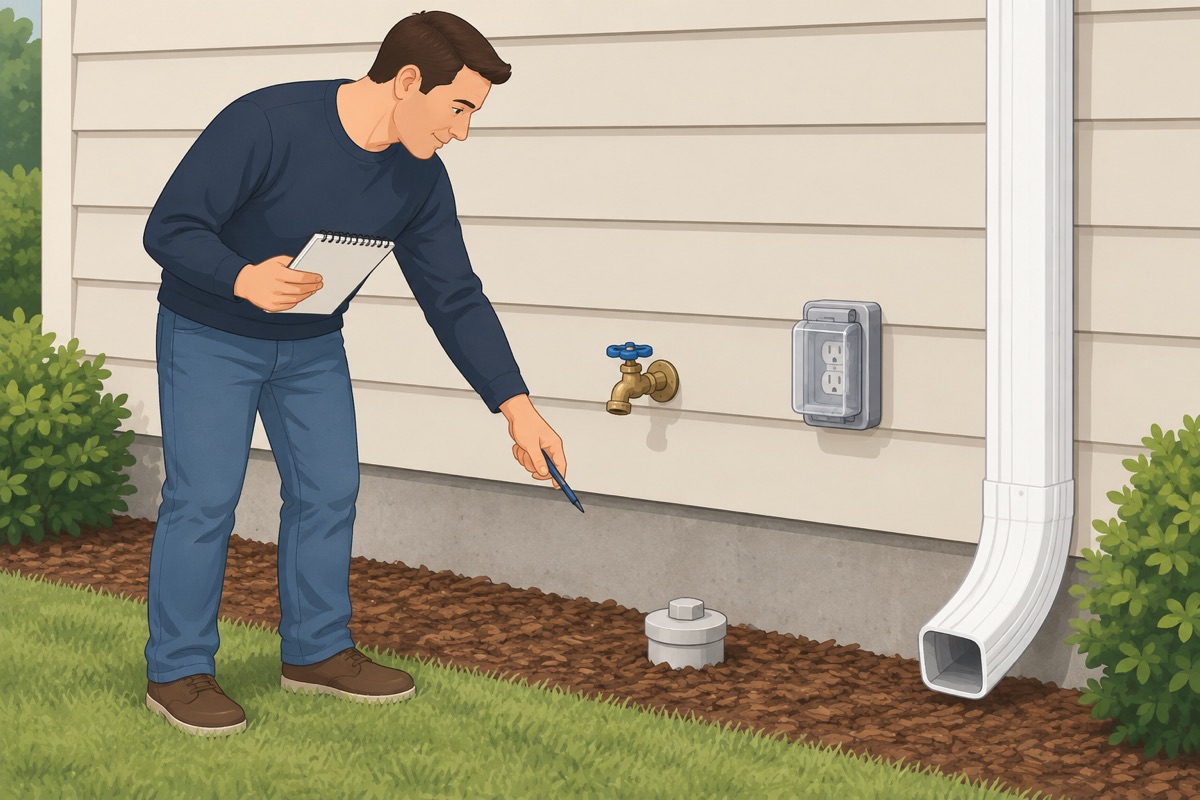
Note the outdoor faucet (hose bib) and each outdoor outlet: does the outlet have GFCI protection and a weatherproof cover that closes with a cord plugged in? Note the downspouts, the AC unit, and any cleanouts, meter boxes and shut-offs. A patio or deck must never cover a cleanout, a meter or a shut-off — leave access.
Step 7 of 9
Measure the yard and draw it
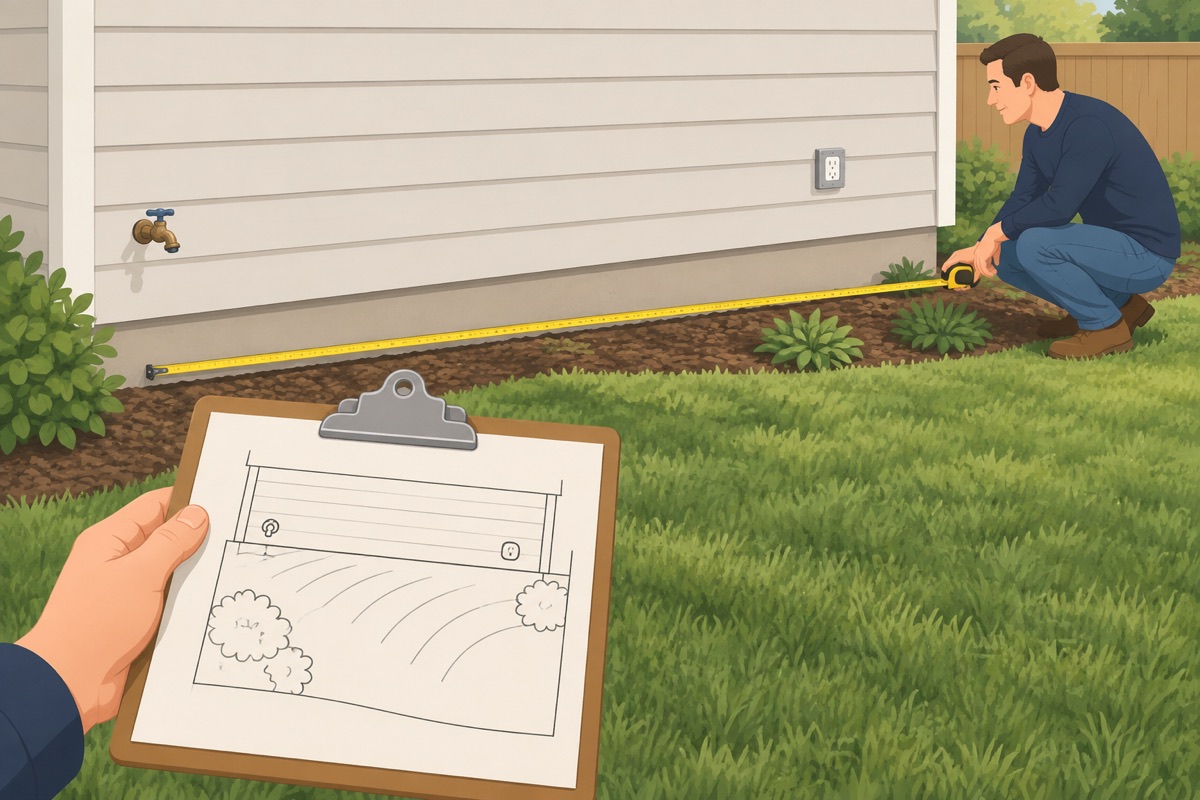
Measure each side and the house wall with the 100 ft tape. Note where the doors are and how high each door threshold sits above the ground — it limits how thick a patio or deck can be. Sketch the yard on paper with the measurements, the 811 marks, the slope arrows and the hookups. Enter the size in the app so the materials are counted for you.
Step 8 of 9
Lay out the plan with stakes and string
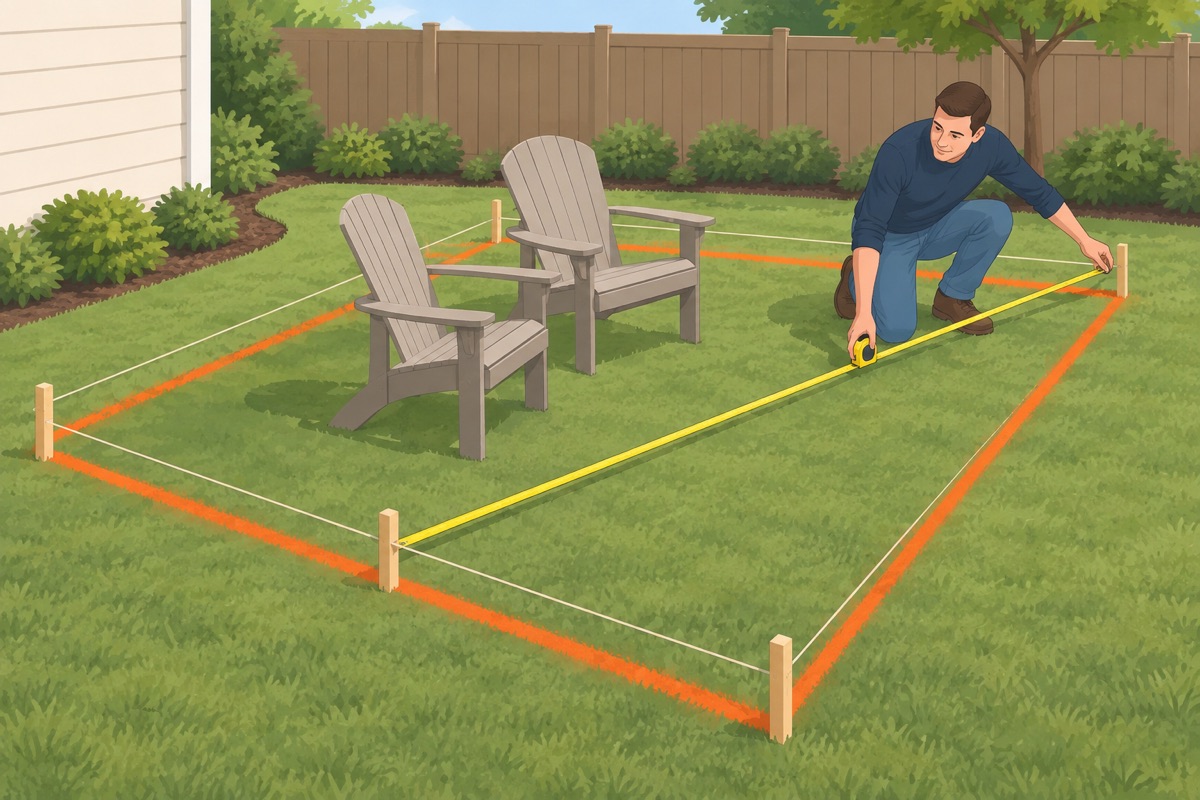
Drive a stake at each corner of the patio, deck, path or lawn you want and run string between them. Square each corner with the 3-4-5 rule: mark 3 ft along one string and 4 ft along the other; the diagonal between the marks must be exactly 5 ft. Spray the outline with marking paint. Live with it for a day: walk it, set chairs inside, look at it from the house.
Step 9 of 9
Put the jobs in order
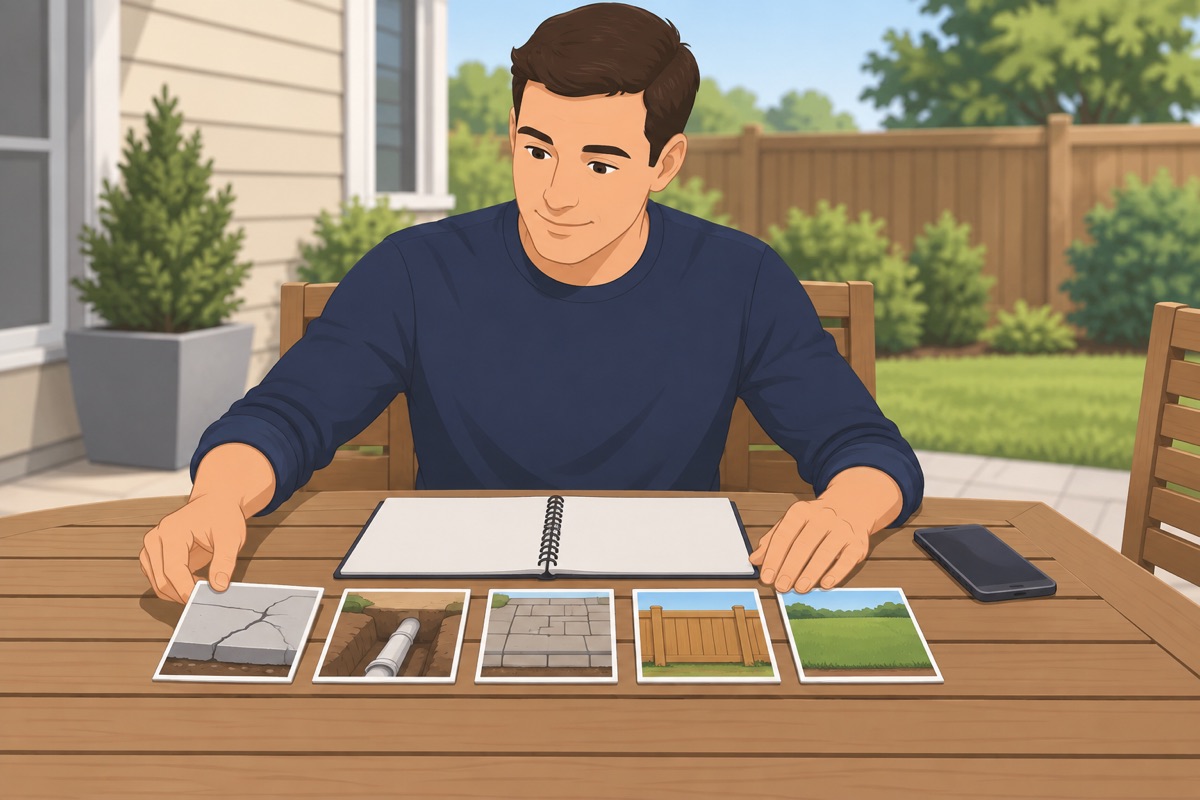
Work from dirty to clean and from under to over: clear and demolish first, then anything buried (lighting cable, drain pipe, irrigation lines), then the hard surfaces (patio, deck, path), then the fence and structures, and plant or lay lawn once the heavy work next to it is done. Call a concrete recycler or your city's transfer station now so you know where the old concrete and soil will go.
Common mistakes
- Digging before the 811 marks are in. Even a post hole or a stake can hit a gas line or a power cable — they are often shallower than you think. The call is free and required nationwide; wait until every utility on the ticket has answered.
- Trusting the old fence as the property line. Old fences are often off the line. Use the survey pins, the plot plan, or a surveyor — not the fence.
- Assuming a backyard job needs no permit. Fences, decks, pergolas and new outlets all have rules. A call to the city costs nothing; tearing out a finished fence costs a lot.
- Planning a surface that slopes toward the house. Water sits against the foundation and finds its way inside. Every patio, path and lawn next to the house must fall away from it.
Draft guide written from standard practice, not yet reviewed by a licensed pro. Follow product labels where they differ.
Get this job planned for your room