How to lay a new sod lawn yourself: step by step
A green lawn in a weekend: the soil prep takes the first day, the sod goes down on the second, and the next two weeks of watering decide whether it takes.
Difficulty 2 of 5 · 1 weekends · you can do this
Photo of your room, the look you pick, then this guide with the materials counted for your room.
What you need
- Sod
- Compost or garden soil (amendment)
- Starter fertilizer
Tools
- Rototiller — About $70–110/day. Only for mixing in the compost; skip it on a small patch and use a spading fork.
- Lawn roller — Fill it with water about a third full for rolling sod.
- Landscape rake (wide, flat)
- Steel garden rake
- Flat and pointed shovels
- Wheelbarrow
- Sharp utility knife or a flat spade (cutting sod)
- Hose and sprinkler
- Gloves, knee pads
Step by step
Step 1 of 11
Check the rules and the water

Look up your water district: lawn-removal rebates, limits on new turf, and watering days. Many allow extra watering for new lawns — ask. Decide how you will water: hose and sprinkler, or an irrigation system (new lines mean digging, 811 first, and a backflow preventer per your city).
Step 2 of 11
Remove the old grass and weeds
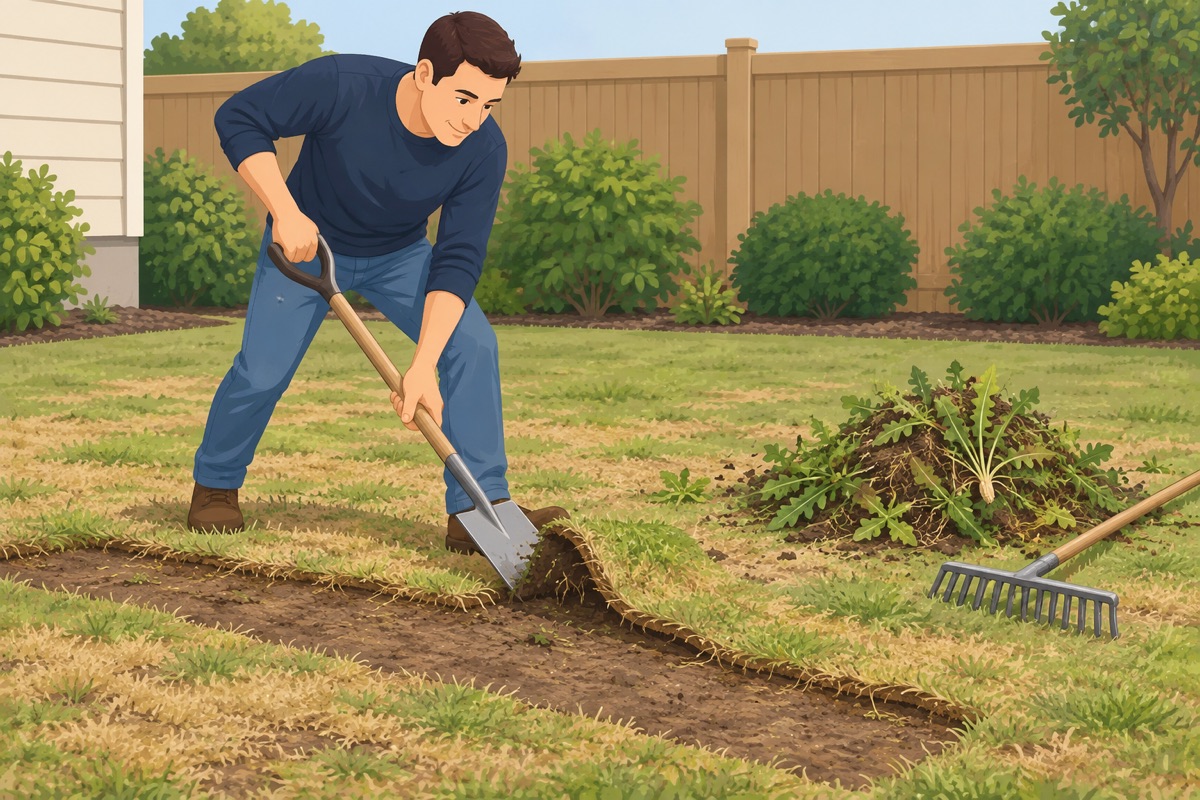
Strip the old lawn with a flat spade or a sod cutter and pull weeds with their roots. Rake out rocks and debris.
Step 3 of 11
Rough-grade with a fall away from the house
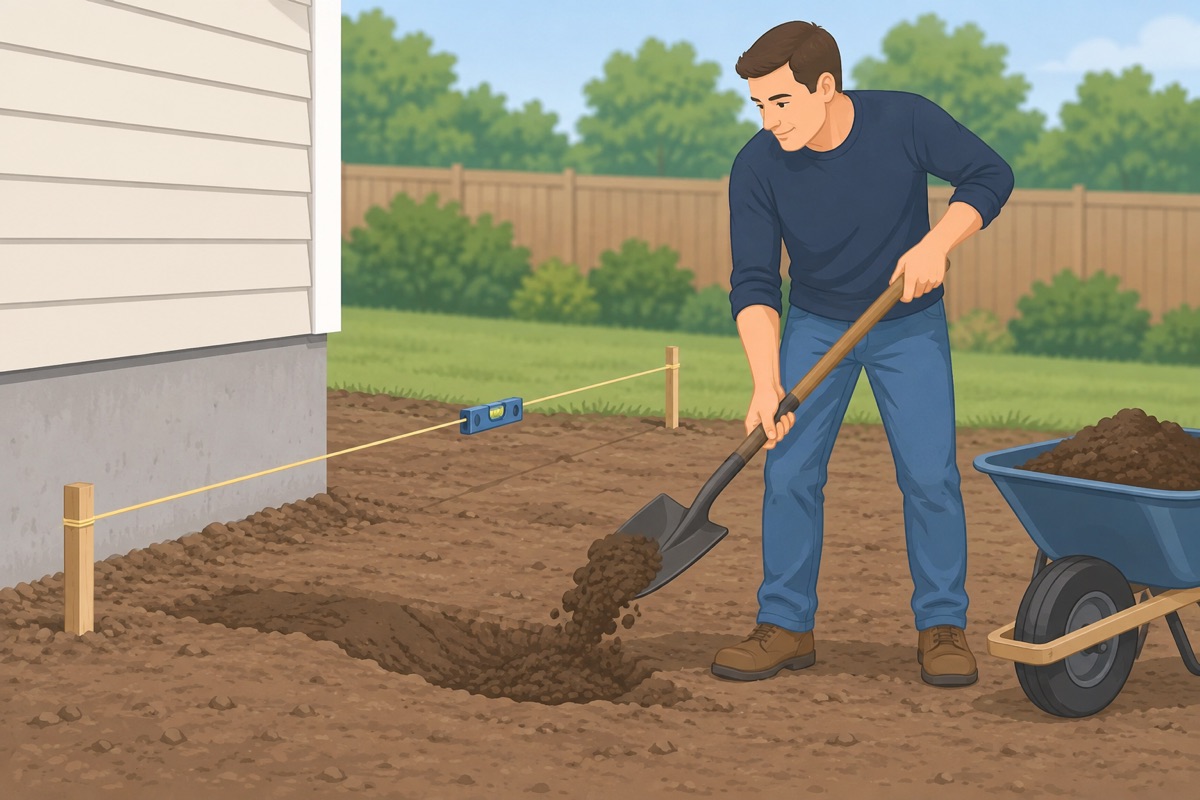
Move soil so the ground falls away from the house everywhere and fills low spots where water would pool. Check with a string and a line level.
Before you till
- 811 marks are in and none cross where you will till, or you will dig by hand there
- The ground falls away from the house everywhere
- You checked your water district's rules and have a way to water the new lawn daily
Step 4 of 11
Amend the top 4 in
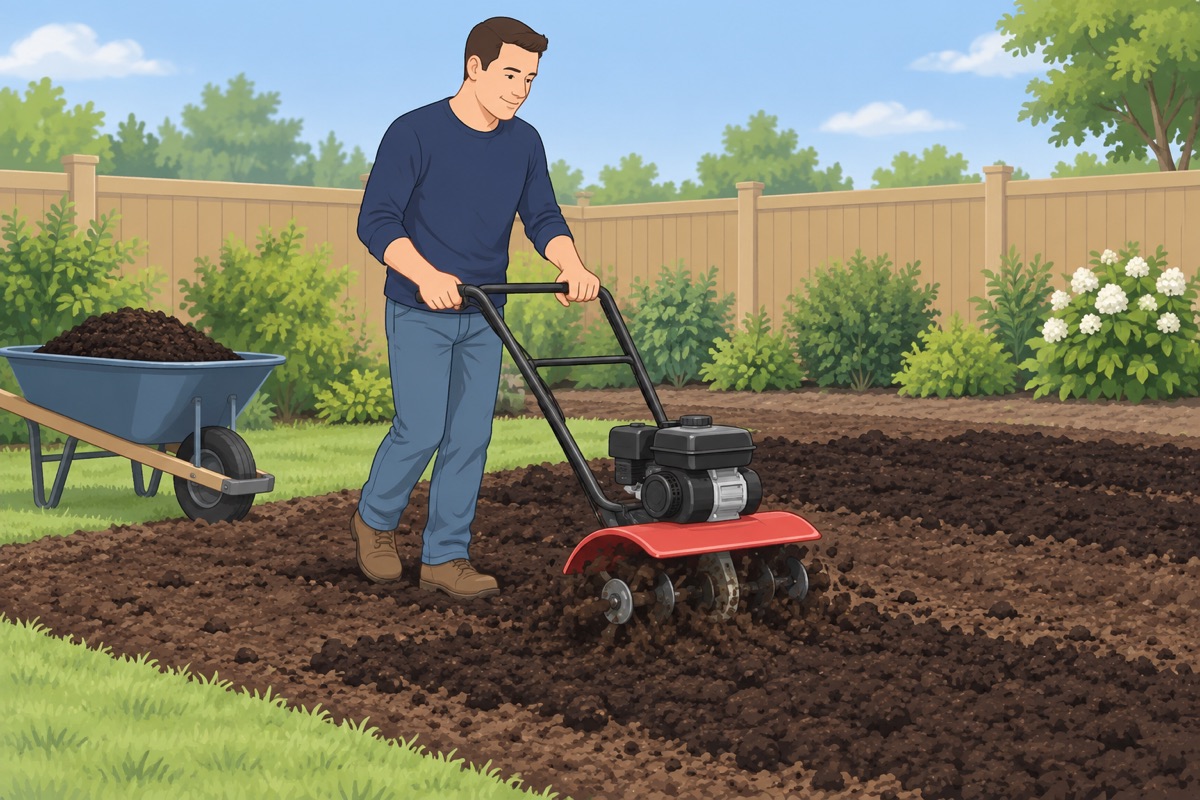
Spread compost about 1 in thick and till or fork it into the top 4 in of soil.
Step 5 of 11
Rake smooth and set the height
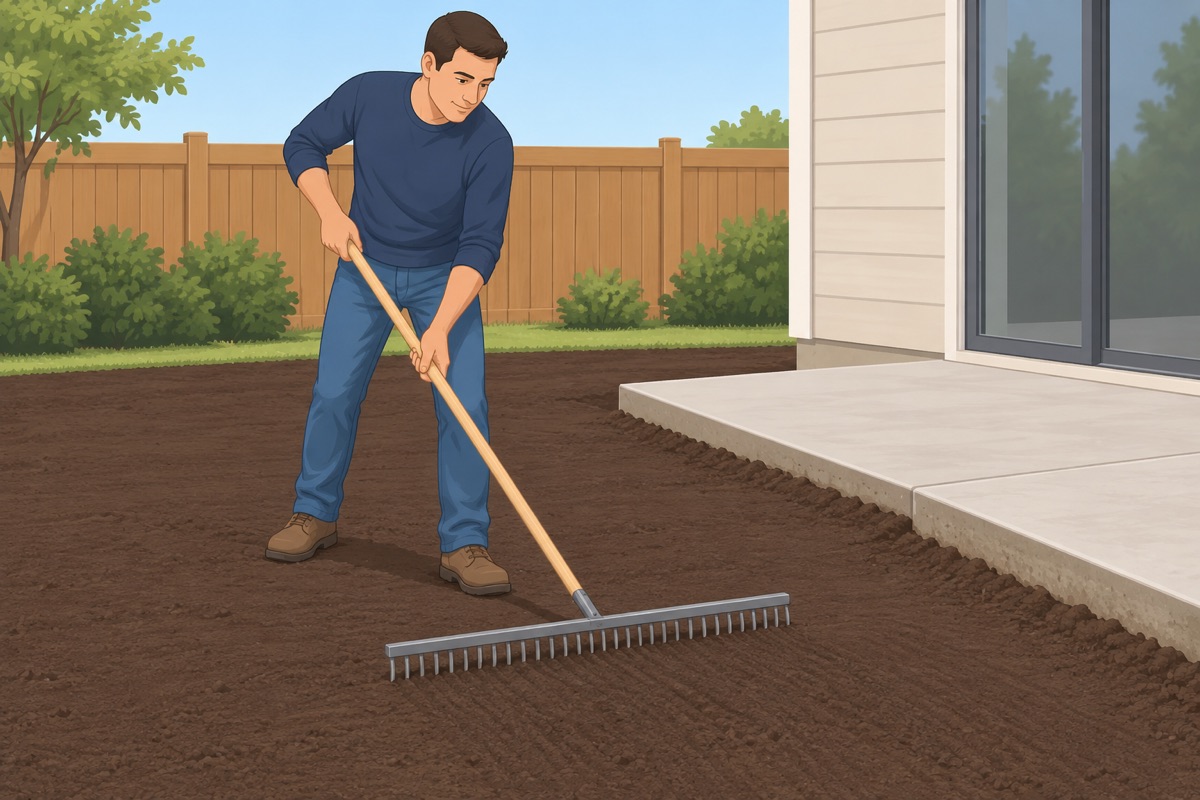
Rake the soil smooth with the landscape rake. Set it one sod thickness below the patio, walks and edging so the finished lawn sits flush with them.
Step 6 of 11
Roll, feed and moisten the soil
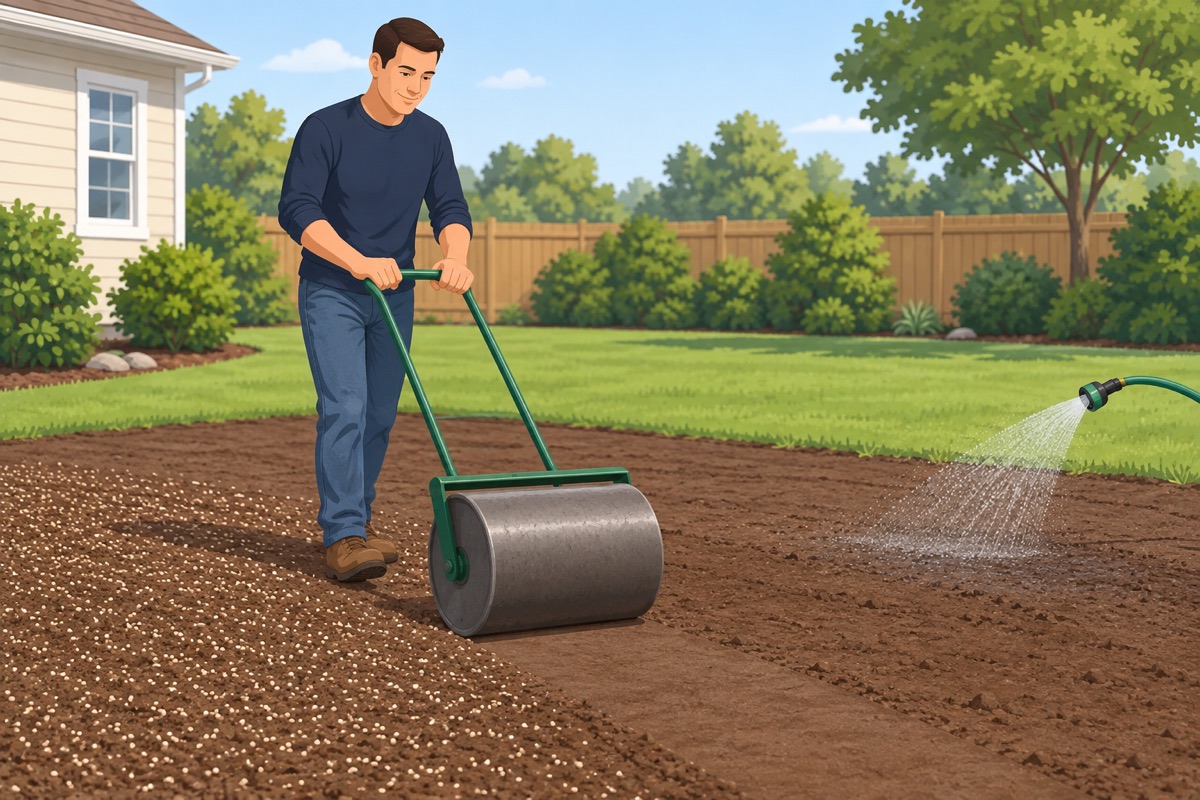
Roll the soil once to firm it, fill any footprints, spread starter fertilizer per the bag, and dampen the soil lightly just before the sod arrives.
Step 7 of 11
Lay the first row along a straight edge
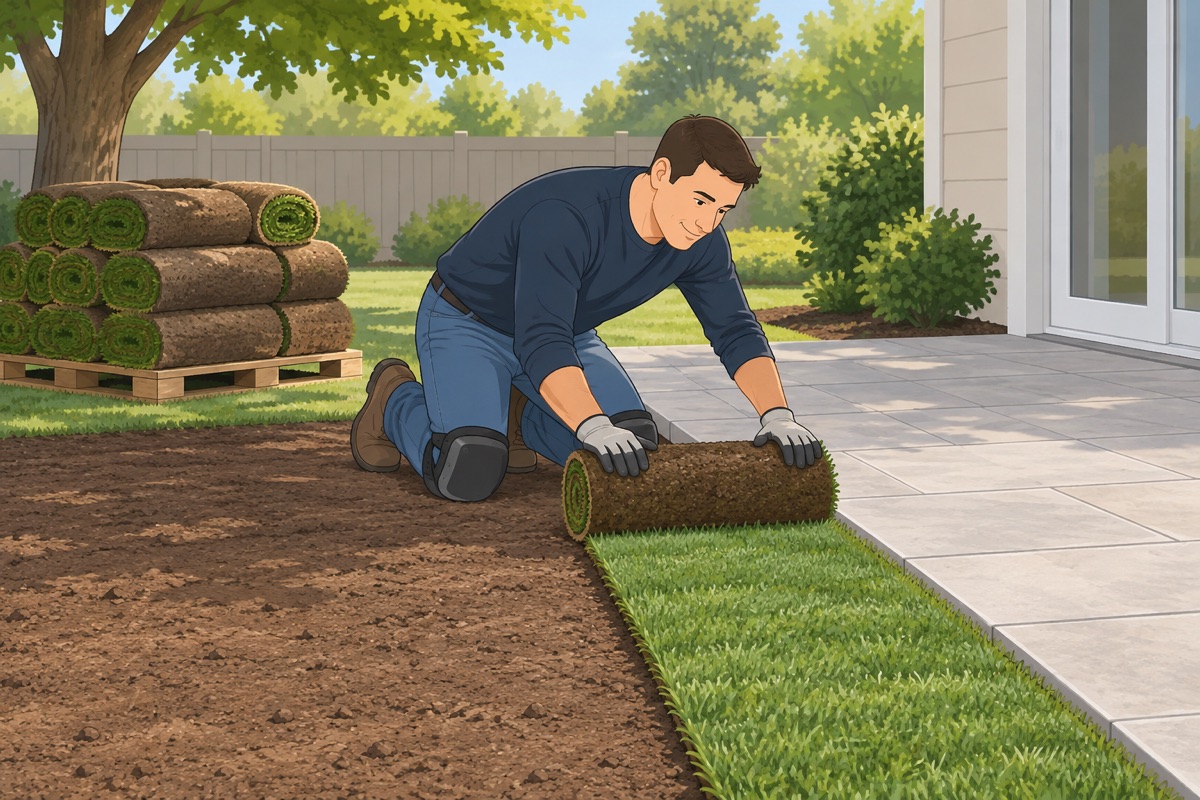
The day the sod arrives, start laying right away along the longest straight edge — a walk, the patio or a string line. Keep the pallet in the shade and cover it if you cannot finish fast.
Step 8 of 11
Lay the rest in a brick pattern
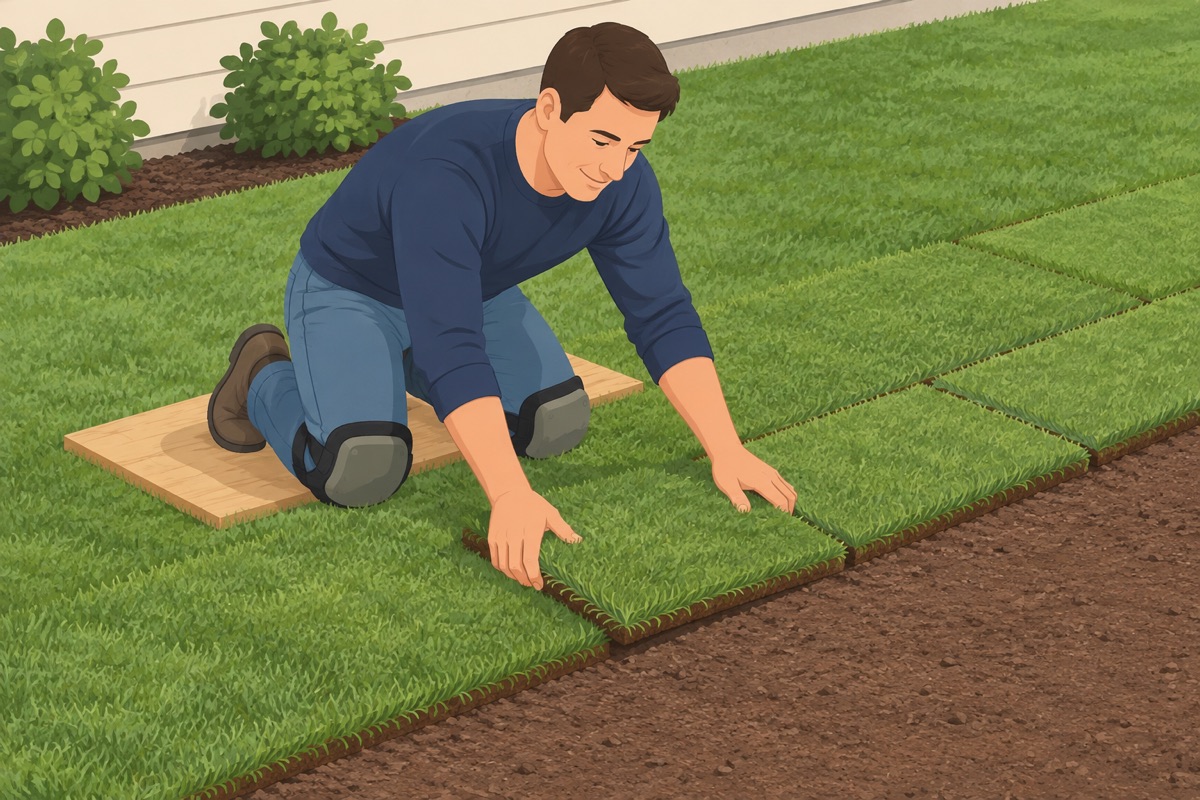
Stagger the end joints like bricks, butt every edge tight without stretching, and kneel on a board on the laid sod, not on the soil. Avoid small pieces at the outer edges — they dry out first.
Step 9 of 11
Cut the edges and roll
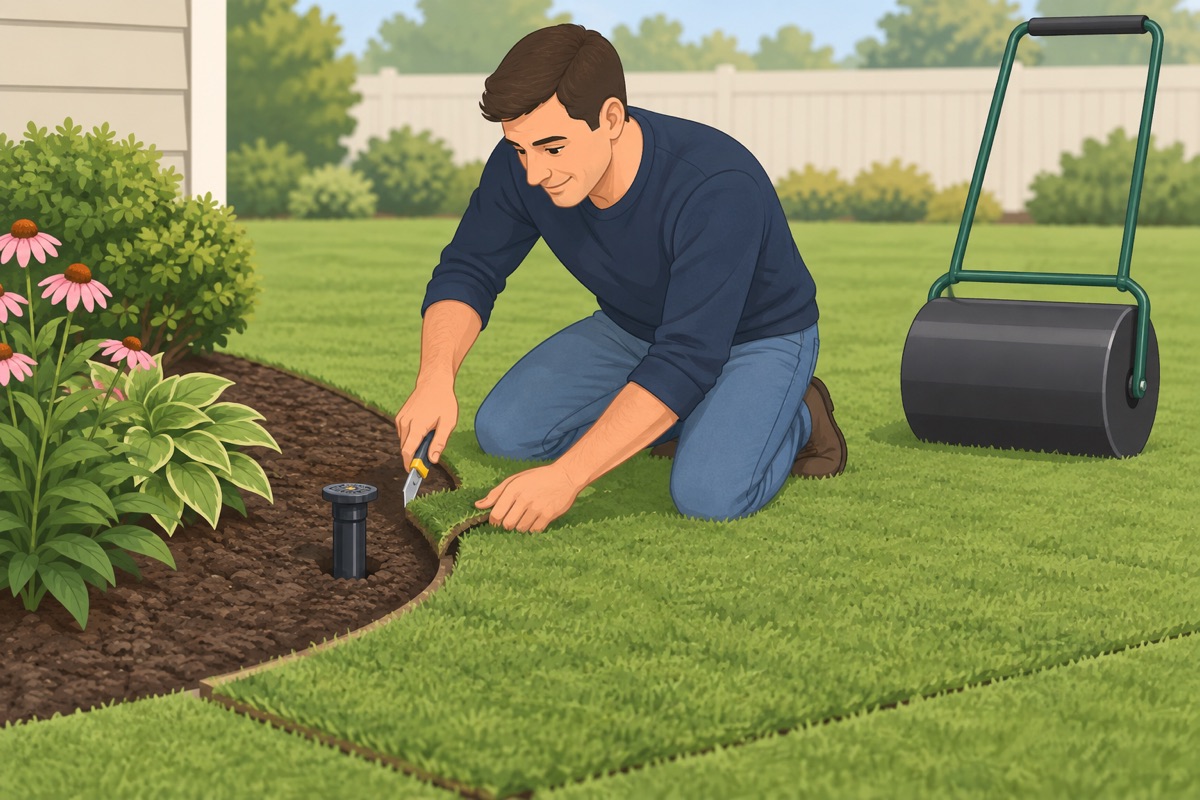
Trim around beds, walks and sprinkler heads with the knife. Roll the whole lawn once so the roots touch the soil.
Step 10 of 11
Water heavily for the first two weeks
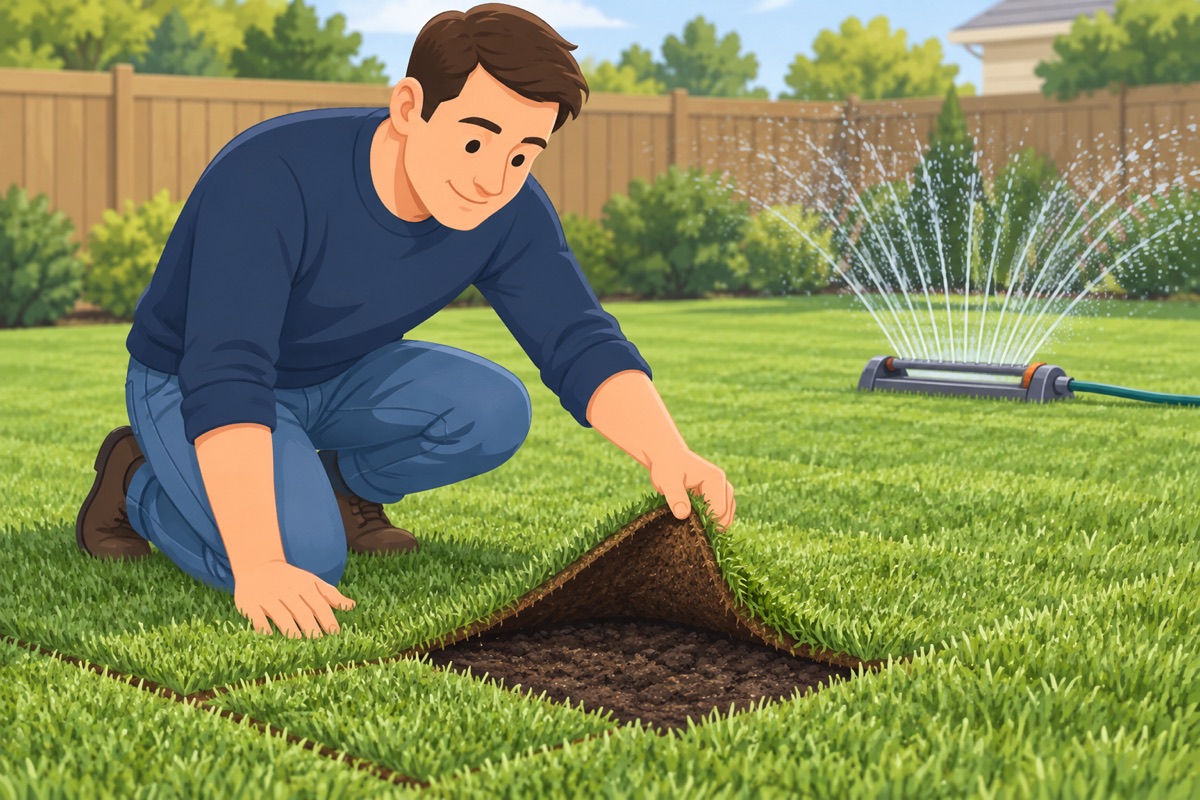
Water right after laying until the soil under the sod is wet — lift a corner to check. Then keep it moist every day for the first 2 weeks, more often in heat. Stay off it.
Step 11 of 11
First mow, then water deeper and less often
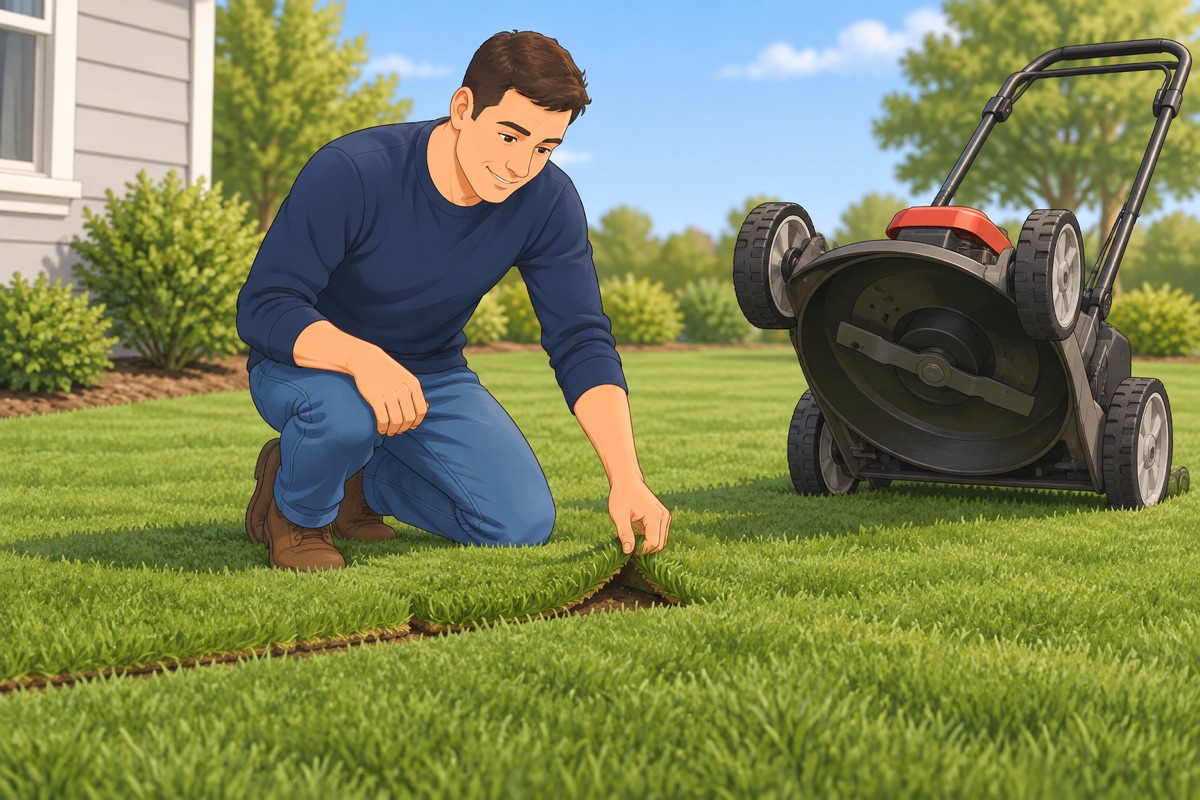
When a gentle tug on a corner meets resistance, the roots have taken. Mow on a high setting, then water less often but longer, so the roots grow deep.
Common mistakes
- Soil set too high at the paths. The sod ends up above the patio and walks, and water runs onto them. Set the soil one sod thickness below every hard edge.
- Letting the sod sit on the pallet. Stacked sod heats up and dies fast, worst in the sun. Lay it the day it arrives, starting right away.
- Gaps and overlaps between the pieces. Gaps dry out and brown; overlaps make bumps that die. Butt every edge tight without stretching the sod.
- Too little water the first two weeks. The roots never reach the soil and the sod shrinks at the seams. Keep the soil under it wet, not just the grass blades.
Draft guide written from standard practice, not yet reviewed by a licensed pro. Follow product labels where they differ.
Get this job planned for your roomRelated guides
- How to install click-lock LVP flooring yourself: step by step
- How to tile a bathroom or kitchen floor yourself: step by step
- How to check a subfloor before new flooring yourself: step by step
- How to level a floor with self-leveling underlayment yourself: step by step
- How to install floor transition strips yourself: step by step
- How to build a paver patio yourself: step by step