How to install a garbage disposal
Short answer
This guide is for a disposal that plugs into a switched outlet under the sink. Difficulty 3 of 5; for a first-timer, plan on about half a day. Read the “Stop here” box below before step 1.
Draft guide written from standard practice, not yet reviewed by a licensed pro. Follow product labels where they differ.
Unplug the old one and close the valves, unhook the drain and the dishwasher hose, take the old disposal or strainer out, set the new sink flange and mounting ring, knock out the dishwasher plug if a dishwasher drains into it, hang the disposal, connect the drain so the trap arm slopes to the wall, then leak-test before it runs.
Difficulty 3 of 5 · about half a day · careful
Stop here
Photo of your room, the look you pick, then this guide with the materials counted for your room.
What you need
- Garbage disposal, with its power cord attached or the cord kit its maker names
- Plumber's putty, or the gasket that comes with the disposal
- Drain parts to reach the trap: tailpiece, trap, slip nuts
- Hose clamp for the dishwasher drain hose
Tools
- Flat screwdriver and a hammer, for the dishwasher knockout plug
- Adjustable wrench and channel-lock pliers
- Hacksaw (trimming a tailpiece or trap arm)
- Bucket, towels, headlamp
- Plastic putty knife and rubbing alcohol
- A helper or a sturdy box to hold the disposal
Step by step
Step 1 of 11
Check how it is powered and read the manual
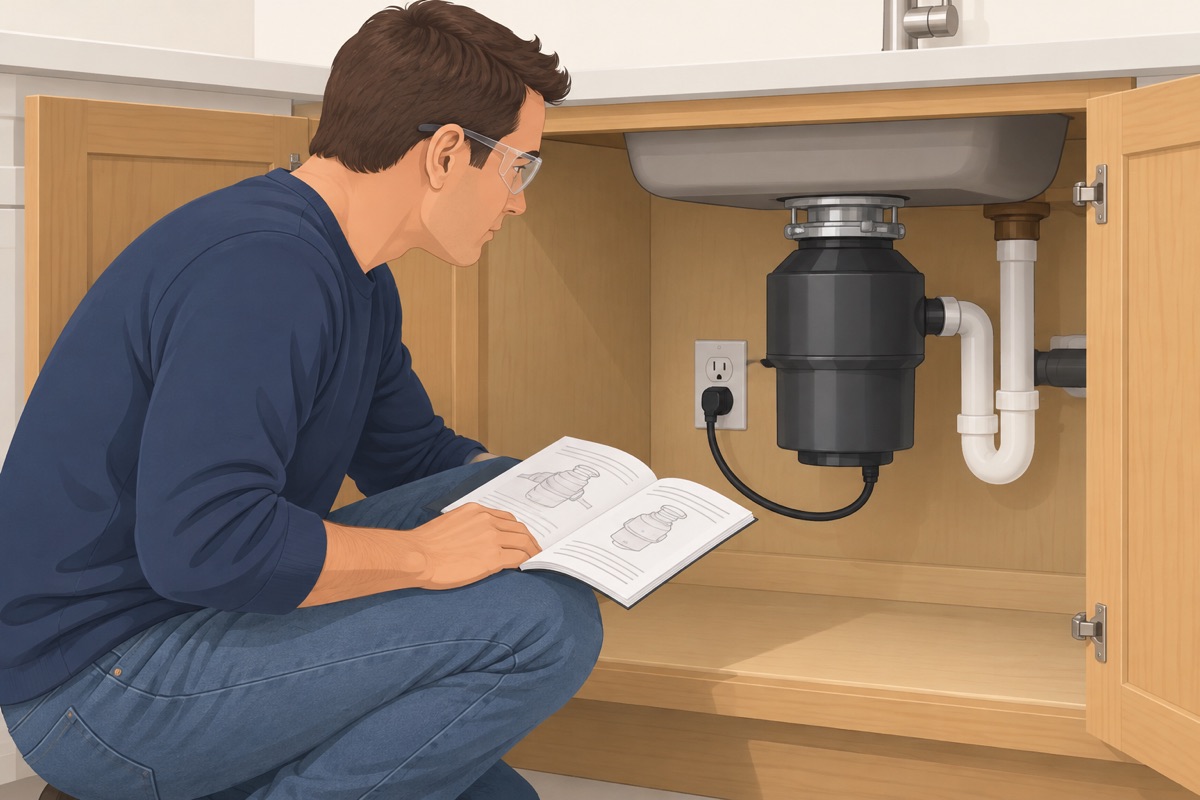
Look under the sink. The old disposal, if there is one, should plug into an outlet there, and a wall switch or an air switch on the counter should turn that outlet on and off. A disposal wired into a box with no plug, or no outlet under the sink, is an electrician's job — see the stop-gate. Read the new disposal's manual: what is in the box, whether a cord is included, and how its mounting ring goes on.
Step 2 of 11
Check the fit under the sink
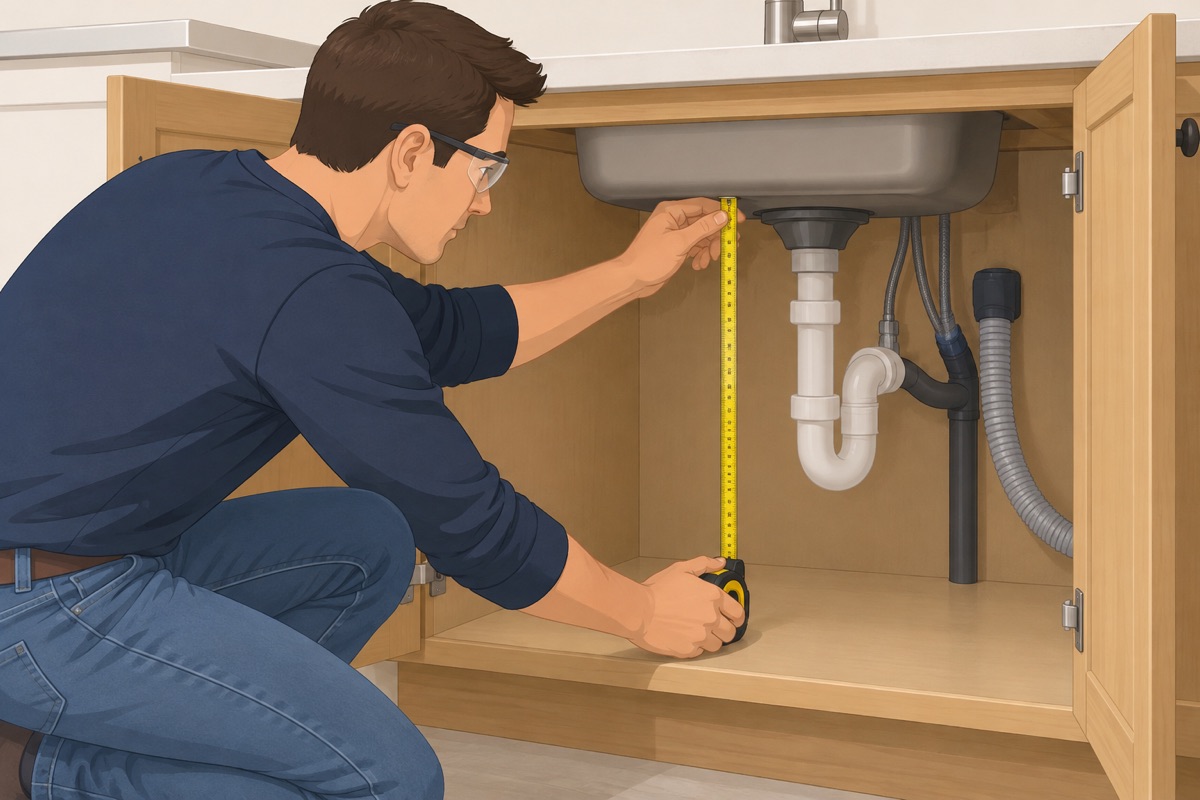
Measure from the bottom of the sink to the cabinet floor, and the height of the drain in the wall. Compare with the disposal's size and the height of its outlet in the manual. Note the pipes, the dishwasher hose, and anything else in the way. Photograph everything under the sink.
Step 3 of 11
Unplug it and turn the water off
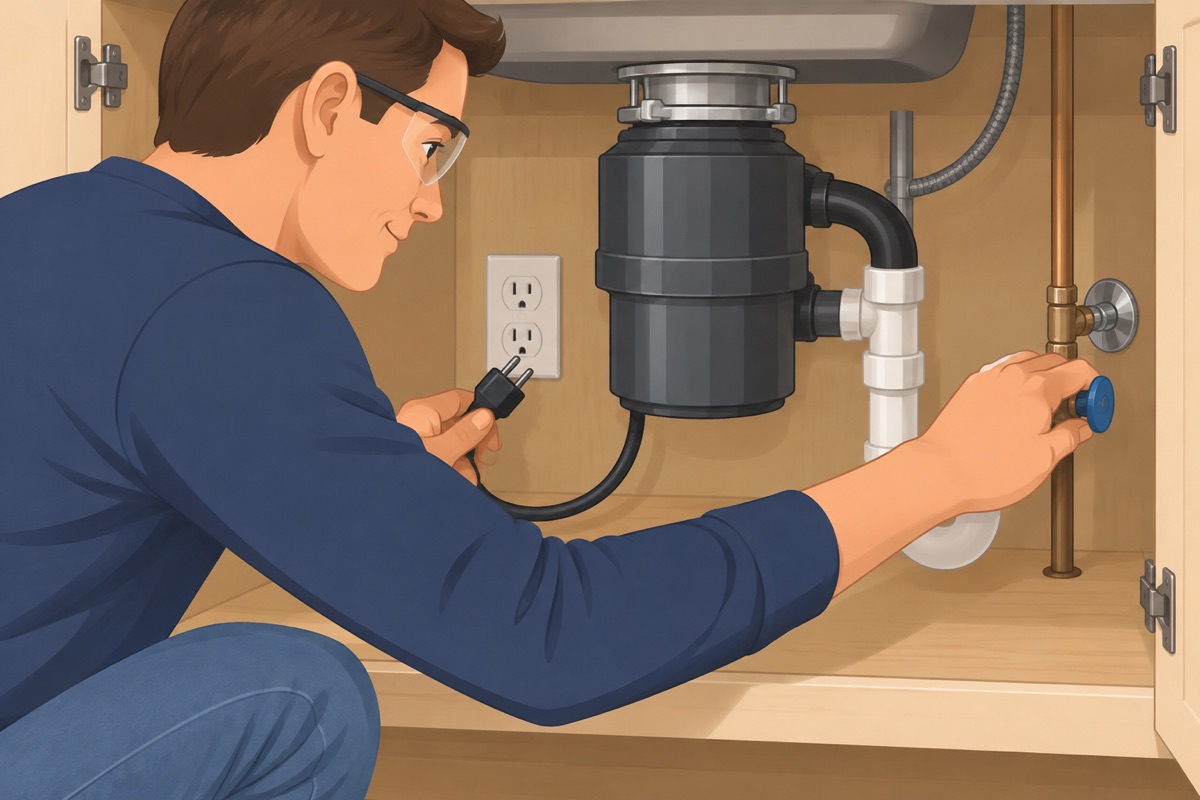
Switch the disposal off and unplug it from the outlet; leave the plug where you can see it. Close both shutoff valves under the sink and open the faucet to prove the water stays off — the dishwasher line often shares the hot valve. If a valve will not close fully or weeps, stop.
Safe to start?
- The old disposal is unplugged and the plug is in sight — or there is no old disposal
- Nothing is hardwired: the disposal plugs into an outlet under the sink, and a switch turns that outlet on and off (or the new one is a batch-feed model that needs none)
- Both shutoff valves close fully: no drip at the faucet or at the stems
- The new disposal fits under the sink, and its outlet sits at or above the drain in the wall
- Bucket, towels, and a headlamp under the sink
Step 4 of 11
Unhook the drain and the dishwasher hose
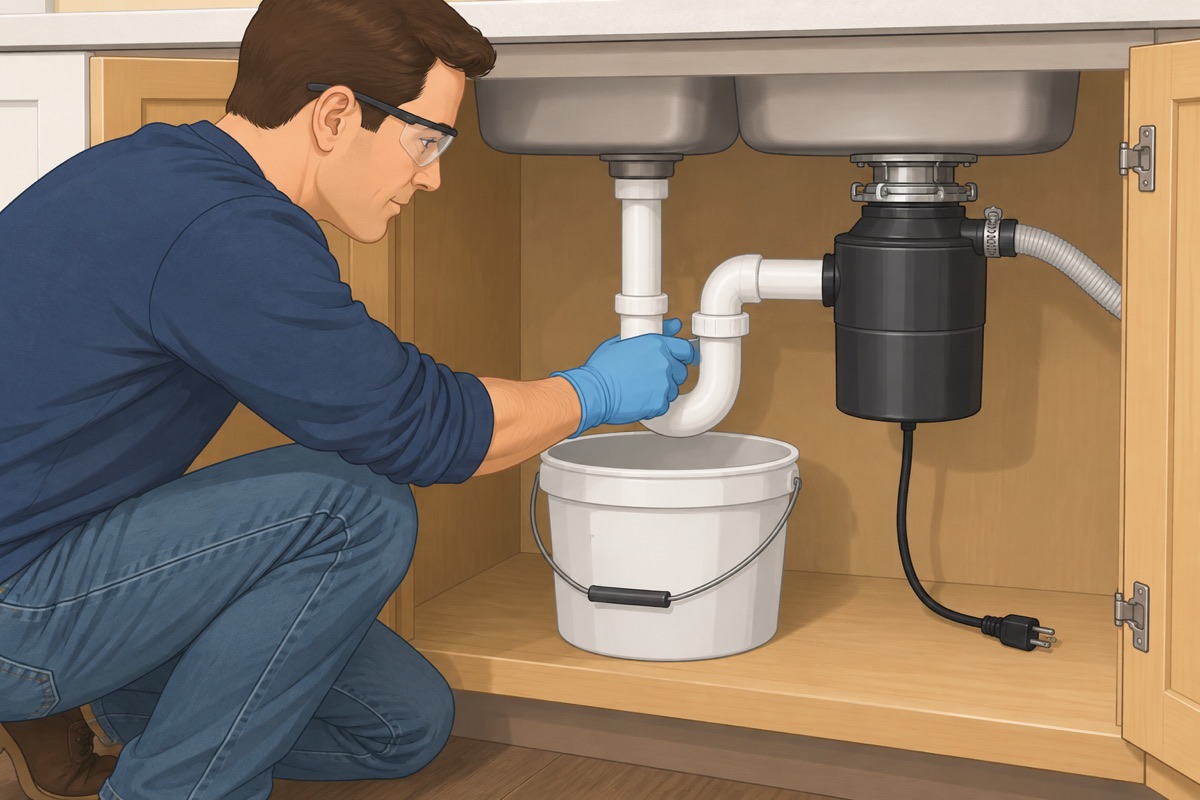
Bucket under the trap. Loosen the slip nuts and take the trap off; let the water drain out. Loosen the clamp and pull the dishwasher drain hose off the old disposal or the drain fitting; note how it runs up to the air gap or the high loop, so it goes back the same way.
Step 5 of 11
Take the old disposal or strainer out
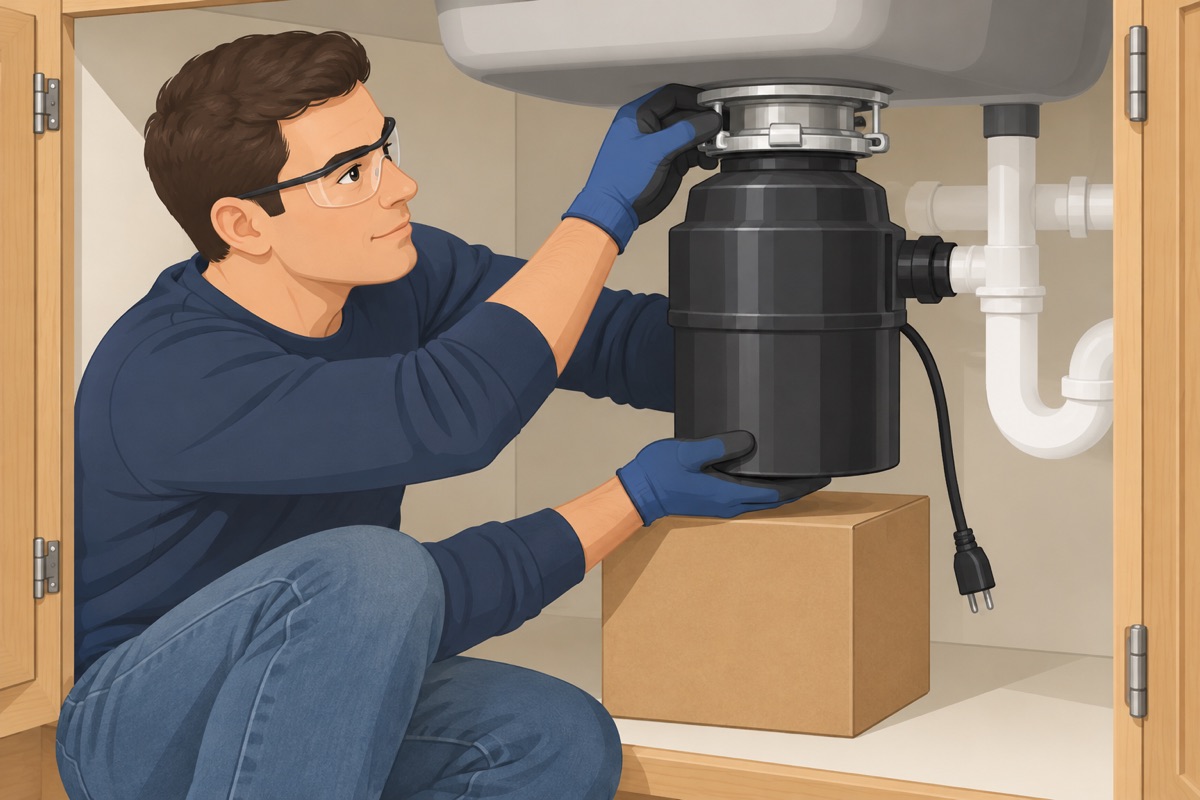
Support the old disposal from below — a helper or a box takes the weight — and turn its mounting ring the way its manual says until it drops free. Then loosen the mounting assembly under the sink and push the old sink flange up and out. No old disposal: take out the basket strainer the same way. Scrape the old putty off the sink opening and clean it with rubbing alcohol.
Step 6 of 11
Set the new sink flange and the mounting ring
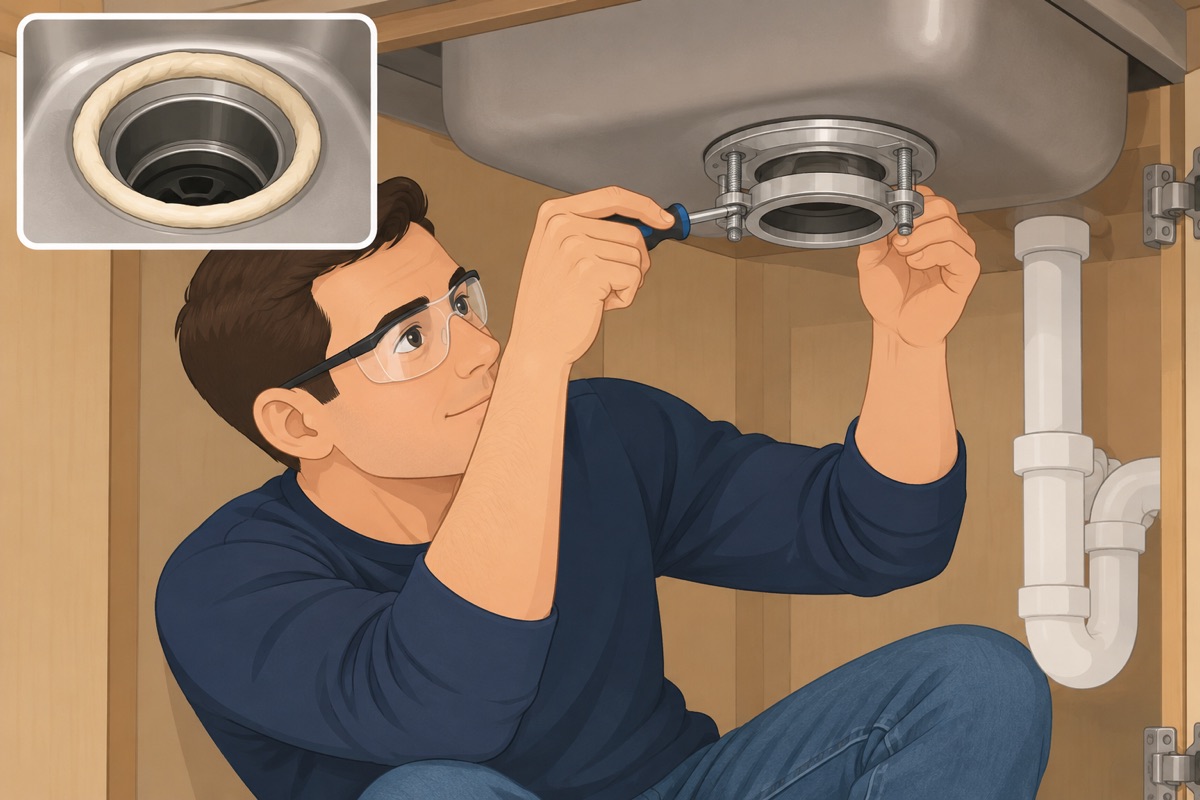
Putty or the supplied gasket under the new sink flange, as the manual says. Press the flange into the sink opening from above; from below, fit the gasket, the backup ring, and the mounting ring, and tighten the screws evenly until the flange is snug. Wipe off the putty that squeezes out in the sink.
Step 7 of 11
The power cord, if it did not come attached
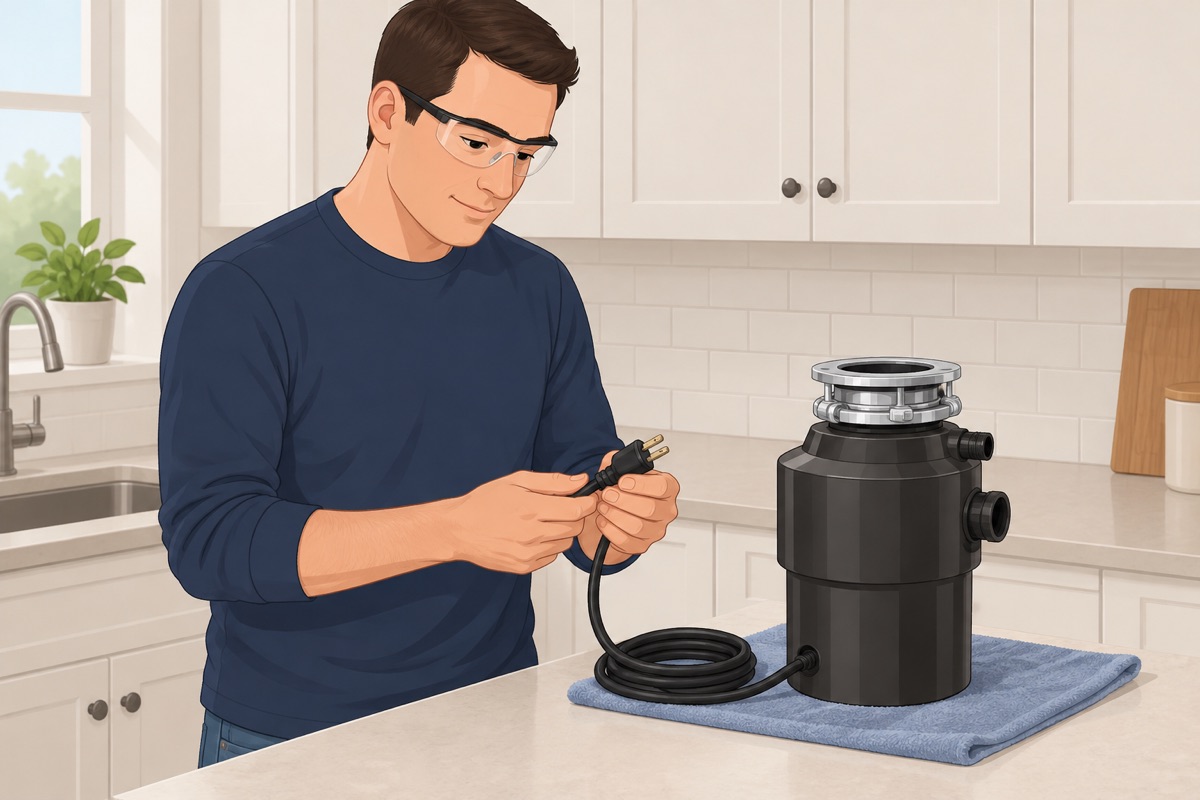
A disposal with its cord already attached: go to the next step — buying one with the cord attached is the simplest choice. One without a cord takes only the cord kit its maker names, fitted while it is unplugged and on the counter, exactly as its instructions say: the wiring cover off, the cord through its strain relief, the wires joined as shown with the ground to the green screw, the strain relief tight so the cord cannot pull on the wires, no bare wire showing, the cover back on. Never cut a plug off, never hardwire it, and never use an extension cord. If any part of the instructions is unclear to you, or the kit is not the one the maker names, an electrician fits the cord.
Before the disposal goes anywhere near the outlet
- The cord came attached from the maker — or the cord kit is the one the maker names, fitted as its instructions say
- The ground wire is on the green screw, the strain relief is tight, no bare wire shows, and the wiring cover is closed
- The disposal is still unplugged, no plug was cut off, and nothing was hardwired
Step 8 of 11
Knock out the dishwasher plug
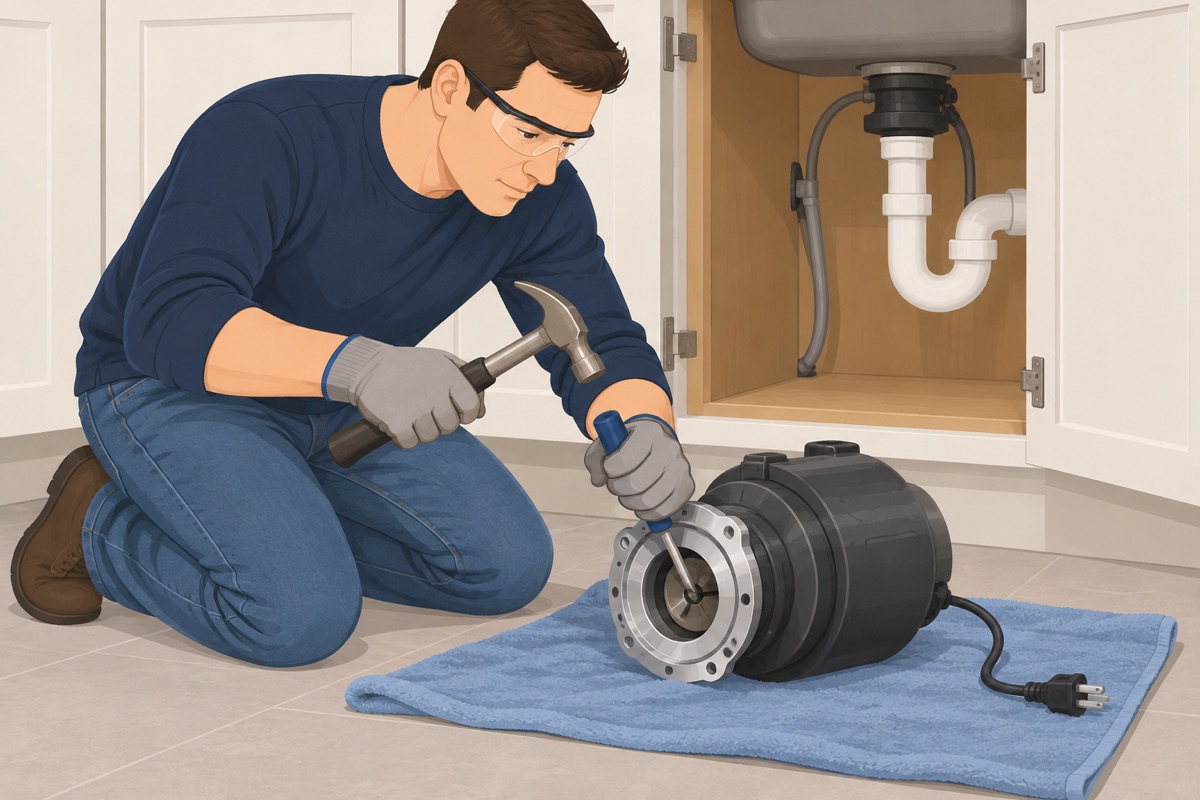
Only if a dishwasher drains into the disposal: lay the disposal on its side on a towel, set the screwdriver on the knockout plug inside the dishwasher inlet, and tap it with the hammer until it breaks loose. Turn the disposal over and take the plug out of the grinding chamber — a loose plug jams the disposal. No dishwasher: leave the plug in.
Step 9 of 11
Hang the disposal on the ring
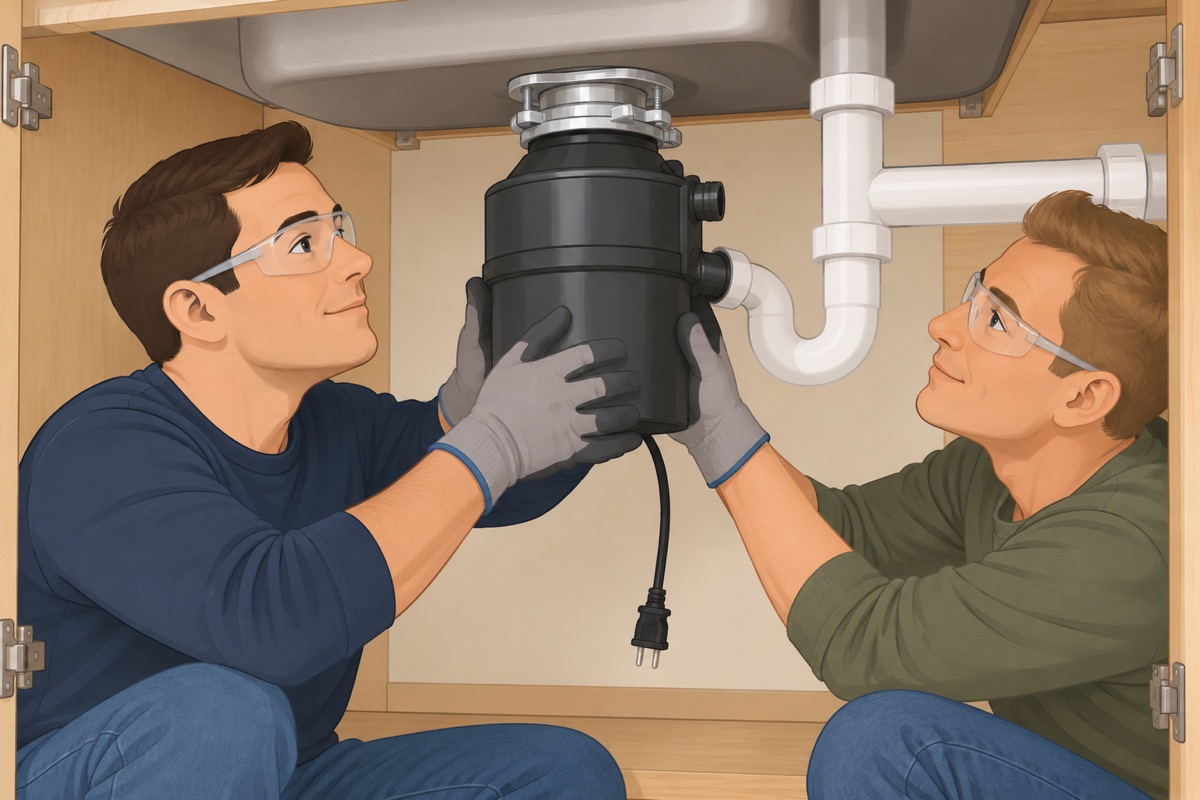
Lift the disposal up to the mounting ring, line up its tabs, and turn the lower ring until it locks, as the manual says. Turn the disposal so its outlet points toward the drain.
Step 10 of 11
Connect the drain and the dishwasher hose
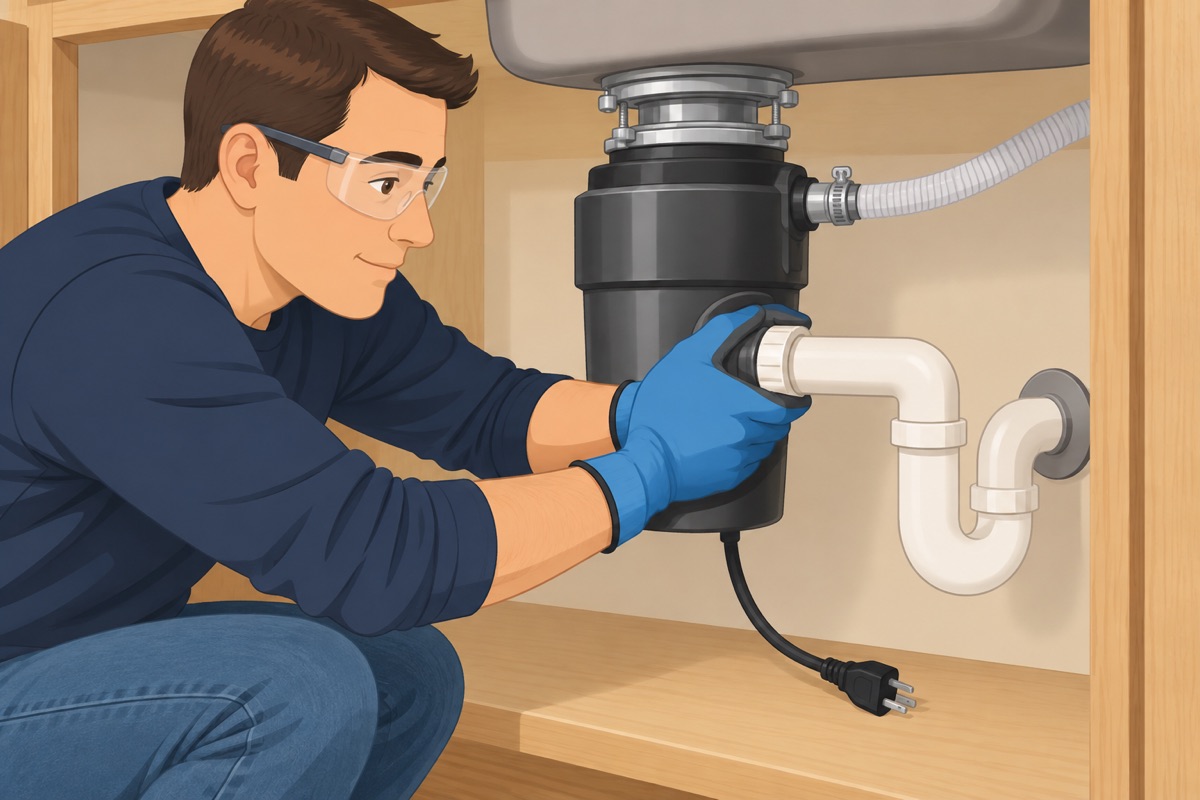
Fit the discharge tube to the disposal with its gasket. Dry-fit the trap and the trap arm so the trap hangs level and the arm slopes down toward the wall; cut a pipe with the hacksaw rather than force a bend. Slip nuts go hand-tight plus a small turn. If a dishwasher drains here, push its hose onto the inlet and clamp it, running up to the air gap or a high loop as your local code and the dishwasher's manual say.
Step 11 of 11
Leak test, then power
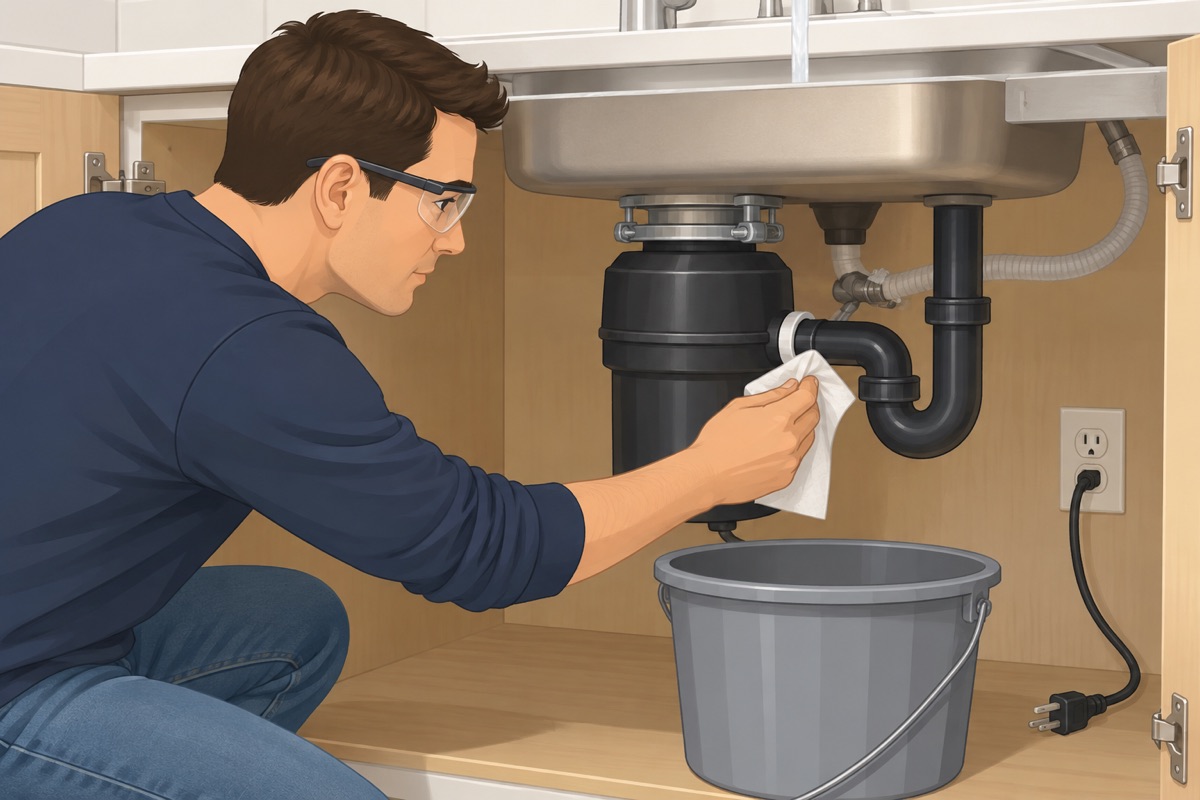
Water on at the valves. Plug the sink, fill it partway, then pull the plug and watch the flange, the disposal, the trap, and the dishwasher hose with a dry paper towel. Dry all of it. Then plug the disposal in, run cold water, and switch it on for a few seconds: it should run smoothly, with no leak. If a dishwasher drains here, run a short cycle and check the hose connection.
Quality check
- No drip at the sink flange, the disposal, the trap, or the dishwasher hose after the water test and a run
- The disposal runs only when the switch is on, and stops when it is off
- If a dishwasher drains here: the knockout plug is out of the disposal, and the hose runs up to the air gap or a high loop, clamped at both ends
- The cord came attached, or the cord kit was fitted as its instructions say with the wiring cover closed, and it plugs into the outlet under the sink
- Both shutoff valves still close fully
Common mistakes
- Working with the disposal plugged in. A disposal can start if someone flips the wall switch while your hands are near it. Unplug it before anything else, and never put your hand into it, plugged in or not. Mistake #1 in this task.
- Leaving the dishwasher knockout plug in. A new disposal ships with its dishwasher inlet blocked. Connect the dishwasher hose without knocking the plug out and the dishwasher cannot drain. Knock it out and take the loose plug out of the disposal before the disposal is hung.
- Lifting it onto the ring without support. A disposal is heavy and hangs on its mounting ring. Hold it from below, or rest it on a box, while you turn the ring until it locks.
- Running the dishwasher hose straight down. Without an air gap or a high loop, dirty water can siphon from the sink back into the dishwasher. Run the hose up to the air gap or a high loop as your local code and the dishwasher's manual say, and clamp it at both ends.
- A trap arm that slopes the wrong way. The trap arm has to slope down toward the drain in the wall. If the disposal's outlet sits lower than the wall drain, water sits in the pipe; that is a plumber's fix, not a longer pipe.
Questions
How do I install a garbage disposal?
Unplug the old disposal and close both valves under the sink. Take off the trap and the dishwasher hose, support the old disposal and turn its mounting ring until it drops free, then push the old sink flange out. Set the new flange with putty or the supplied gasket, fit the mounting ring from below, knock out the dishwasher plug if a dishwasher drains into it, hang the disposal on the ring, connect the drain, and test with water before you plug it in.
Do I need to knock out the dishwasher plug on a new disposal?
Only if a dishwasher drains into it. A new disposal ships with its dishwasher inlet blocked; connect the hose without knocking the plug out and the dishwasher cannot drain. Lay the disposal on its side, tap the plug out with a screwdriver and a hammer, and take the loose plug out of the grinding chamber before the disposal is hung.
Can I install a garbage disposal myself if it is hardwired?
Not with this guide. It covers a disposal that plugs into an outlet under the sink that a switch turns on and off. A disposal wired straight into a box, no outlet under the sink, or an outlet that is cracked, scorched or loose is a licensed electrician's job.
When should I stop and call a pro?
This guide is for a disposal that plugs into an outlet under the sink, with a wall switch or an air switch that turns that outlet on and off. Stop and hire a licensed electrician if: the old disposal is wired straight into a box instead of plugged in; there is no outlet under the sink, or nothing switches it (unless your new disposal is a batch-feed model that its manual says needs no switch); or the outlet is cracked, scorched, or loose. Wiring a disposal into a box, adding an outlet or a switch, or changing the wiring at the wall is an electrician's job. Stop and call a plumber if: a shutoff valve under the sink will not close fully or weeps — the dishwasher line often shares it; the drain pipe in the wall is cracked, corroded, or moves when you touch it; or the new disposal's outlet sits lower than the drain in the wall, so the trap cannot slope down toward the wall. On a septic system, read what the disposal's maker says about septic first. The dishwasher drain hose must run through an air gap or a high loop as your local code and the dishwasher's manual say. Never put your hand into a disposal, plugged in or not — use the tools its manual names.