Frameless glass shower door: what the installer does and what you do
Short answer
A frameless glass shower door is a glass installer's job: the panels are heavy tempered glass made to the installer's own measurements, and the hinges are drilled through the tile into solid wood. This job needs a licensed pro.
Draft guide written from standard practice, not yet reviewed by a licensed pro. Follow product labels where they differ.
Your part is to pick the style, let each bidder measure the finished opening, check licenses, get bids that name every part, clear the room and inspect the door before the last payment.
Difficulty 5 of 5 · licensed pro
Stop here
Photo of your room, the look you pick, then this guide with the materials counted for your room.
What you need
- Frameless glass door (the installer supplies it; this line is the one you picked)
- Job folder for bids, the contract, and the warranty
Tools
- Tape measure
- Phone camera
- Notebook for bid comparison
Step by step
Step 1 of 8
Accept that this one is the installer's

Frameless glass hangs on hinges drilled through the tile into solid wood, and the panels are made to the installer's own measurements. Your part is to choose, hire well, prepare the room, and check the result. Read the stop-gate and confirm you understand it.
Before you go further
- You will not drill the tile, hang the glass, or carry the panels yourself
- You understand the glass is made to the installer's measurements, after the tile is done
- You know a framed or semi-frameless kit is the DIY option, if you change your mind
Step 2 of 8
Pick the style before anyone measures
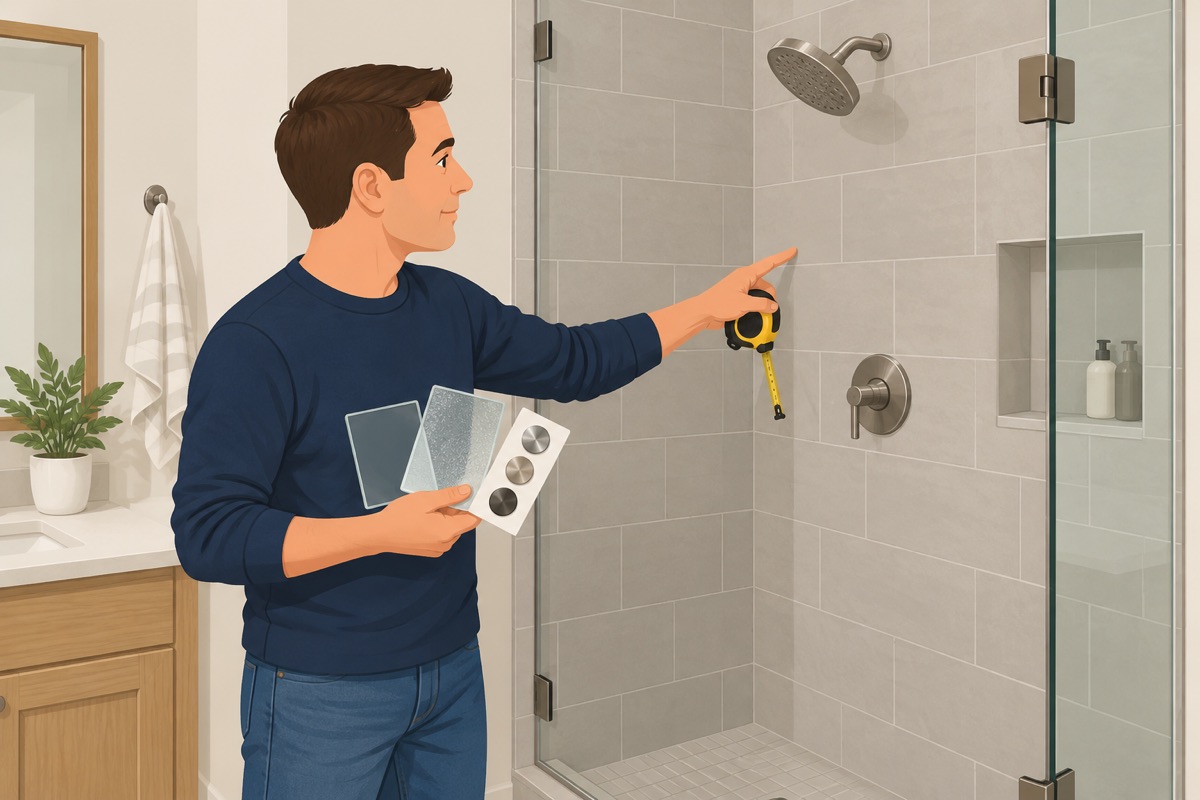
Decide on a door alone or a door with a fixed panel, the way it swings, the hinge and handle finish, and the kind of glass. Note where the valve, the shower head, and any niche sit: the hinges and the handle must clear them. Tell the installers which wall you want the hinges on.
Step 3 of 8
Let the installer measure the finished opening
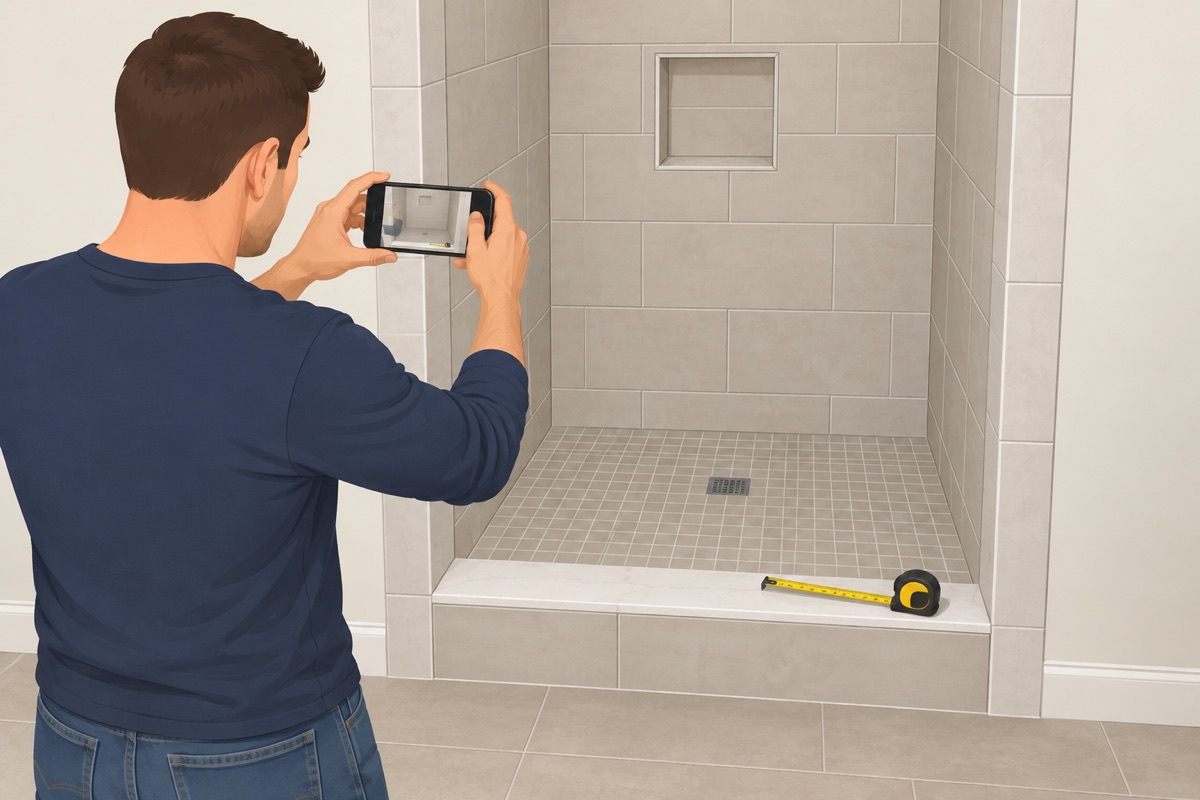
The glass is ordered after the tile and the curb are finished and the grout has cured. Each bidder measures the opening themselves; your rough measurements are only for a first price. Photograph the opening, the curb, and both walls, and send the same photos to every bidder.
Step 4 of 8
Check the license, the insurance, and the record

Look up each company with your state's contractor license board (CSLB in California) where your state licenses this work, and confirm the license is active and in the bidder's name. Ask for proof of liability insurance and for the glass and hardware warranty in writing.
Step 5 of 8
Get bids that name every part

Each bid should name the glass type and thickness, the safety-glass marking, the hinges, the handle, the seals and sweeps, how the hinges are fastened and what is behind them, the lead time for the glass, the removal of an old door, and the silicone. Anything not written down is not included.
Before you sign
- License and insurance checked
- The bid names the glass, its thickness, the hinges, the handle, the seals, and how the hinges are fastened
- The last payment is held until you have checked the door at hand-over
Step 6 of 8
Clear the room for install day
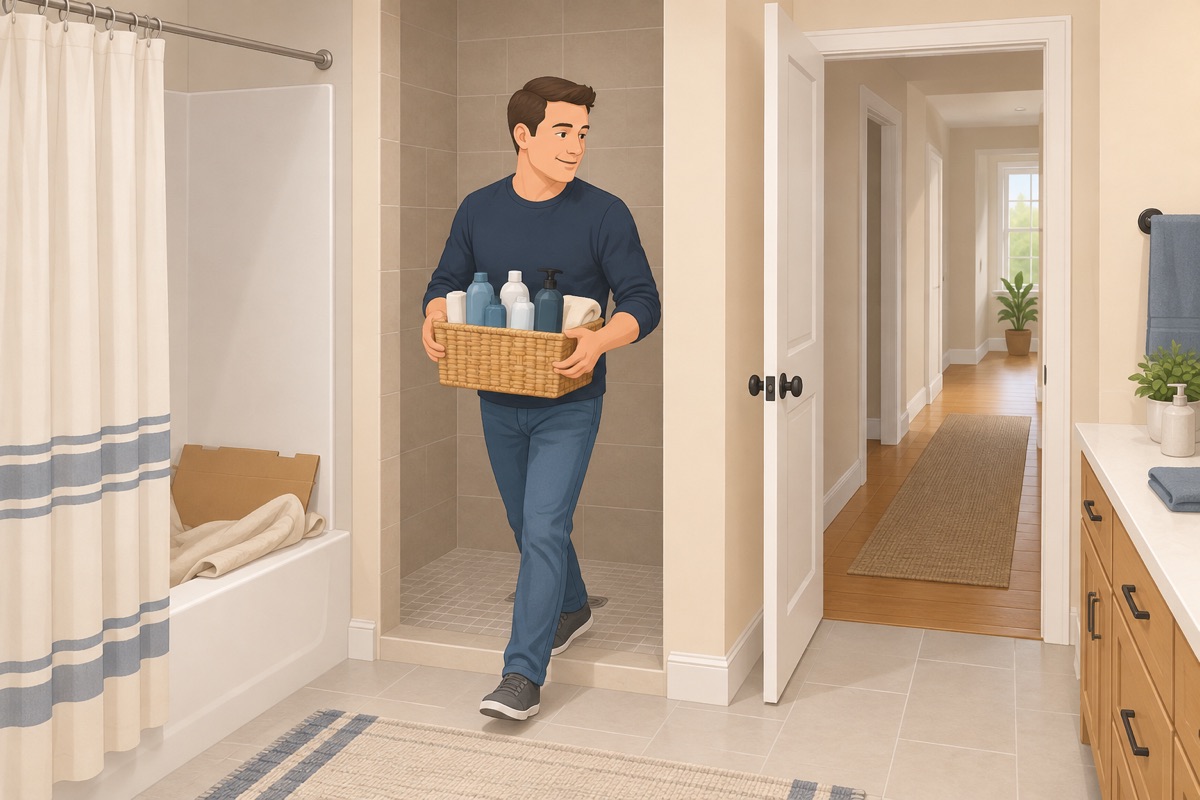
Empty the shower and the vanity top, take down anything on the walls near the opening, and clear a path from the front door for the glass. Lay a drop cloth or cardboard in the tub or on the shower floor for the installer to stand on. Keep kids and pets out while the glass is carried and hung.
Step 7 of 8
Check the door before the last payment
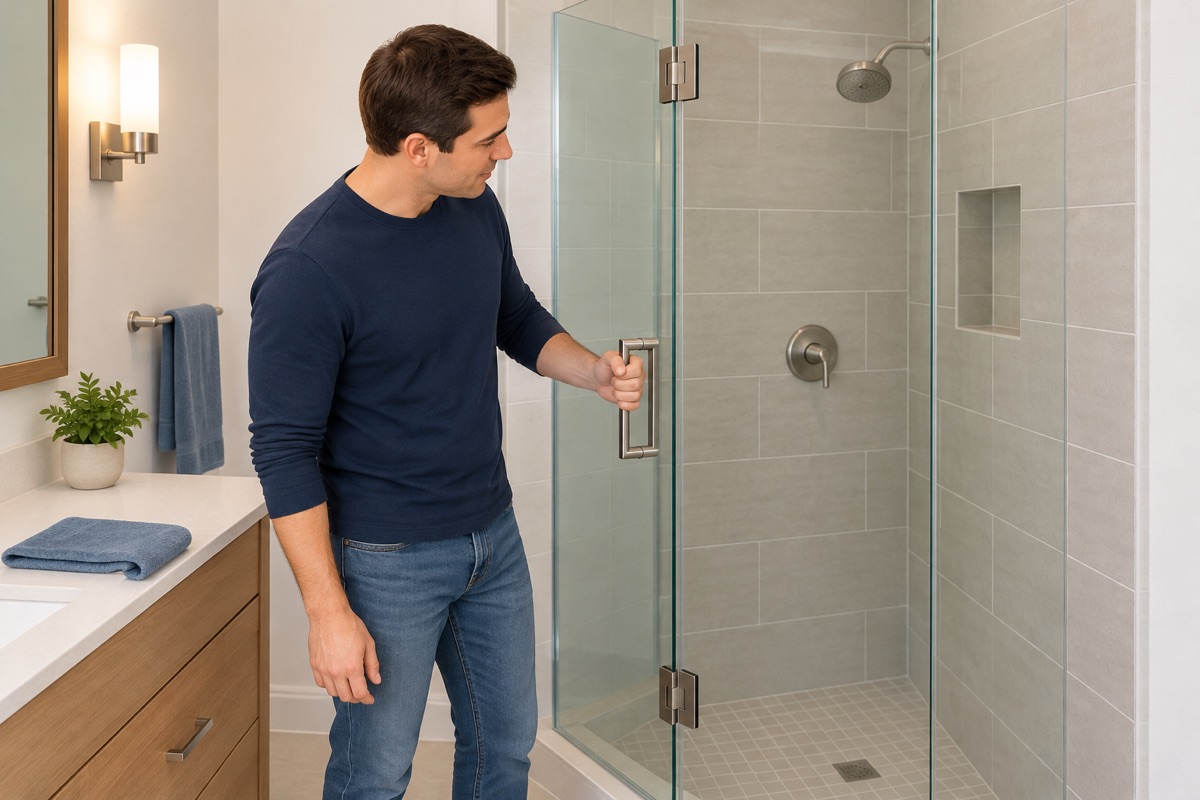
Swing the door through its full travel: it does not touch the tile, the curb, or a fixed panel. Look at every hinge: tight to the tile, with no cracked tile around it. Look along every glass edge for chips, and find the safety-glass marking on each panel. Ask the installer how long the silicone must cure, keep water off it until then, then run the shower against the closed door and look for water outside.
Before the final payment
- The door swings through its travel without touching tile, the curb, or glass
- No cracked or chipped tile at any hinge or clamp
- No chip on any glass edge, and the safety-glass marking is on each panel
- After the silicone cured: no water outside the shower with it running against the closed door
- The glass and hardware warranty is in the job folder
Step 8 of 8
Keep the paperwork and the care routine

Keep the invoice, the warranty, and the care instructions for the glass and the hinges in the job folder. Squeegee the glass after showers and follow the installer's advice on cleaners and on checking the hinges.
Common mistakes
- Hanging the glass yourself. The panels are heavy, a chipped edge can make tempered glass burst, and the hinges must reach solid wood behind the tile. A door that sags or a hinge that pulls out is a broken panel and a cracked wall. Mistake #1 in this task.
- Ordering glass from your own measurements. Tempered glass cannot be cut after it is made. The installer measures the finished opening and owns the size; your numbers are only for a first price.
- Accepting a bid that just says "shower door". The glass type and thickness, the hinges, the handle, the seals, how the hinges are fastened, and the removal of an old door are separate items. If a bid does not name them, ask in writing, or you cannot compare bids.
- Showering before the silicone cures. Water on fresh silicone washes it out of the joint. Ask the installer how long to wait, and keep water off it until then.
Questions
Can I install a frameless glass shower door myself?
Not in this guide. The panels are heavy tempered glass made to the installer's measurements, and the hinges are drilled through the tile and fastened into the framing or blocking behind it; a hinge that misses solid wood, or a cracked tile, lets go, and tempered glass with a chipped edge can shatter. Hire a glass and mirror company or a contractor. A framed or semi-frameless door kit is a DIY job and has its own guide.
What should a frameless shower door bid include?
Each bid should name the glass type and thickness, the safety-glass marking, the hinges, the handle, the seals and sweeps, how the hinges are fastened and what is behind the tile where they go, the lead time for the glass, and the removal of an old door. A bid that just says "shower door" leaves these open: ask in writing.
When is a frameless shower door measured and ordered?
After the tile and the curb are finished and the grout has cured. Each bidder measures the finished opening themselves, because tempered glass cannot be cut after it is made; your own measurements are only for a first price. Photograph the opening, the curb and both walls for the bidders.
When should I stop and call a pro?
A frameless pivot or hinged glass door is a glass installer's job in this app. The panels are heavy tempered glass made to the installer's own measurements, and the hinges are drilled through the tile and fastened into the framing or the blocking behind it: a hinge that misses solid wood, or a cracked tile, lets go, and tempered glass with a chipped edge can shatter. Do not drill the tile, hang the glass, or carry the panels yourself. Hire a glass and mirror company or a contractor, and check their license with your state's contractor license board (CSLB in California) where your state licenses this work. Ask before you sign how the hinges will be fastened and what is behind the tile where they go. A framed or semi-frameless door kit is a DIY job: that is the shower door guide.