Final checklist for an outdoor renovation project
Short answer
Before you call outdoor work done, walk everything you built in daylight: gates and latches, water running away from the house (use a hose), lights at dusk, nails and staples in the lawn, paint touch-ups, tools and rentals back, then photos, receipts and warranties in one folder. Difficulty 1 of 5; for a first-timer, plan on about half a day. Read “When to stop” below before you start.
Draft guide written from standard practice, not yet reviewed by a licensed pro. Follow product labels where they differ.
Difficulty 1 of 5 · about half a day · you can do this
Photo of your room, the look you pick, then this guide with the materials counted for your room.
What you need
- Magnetic sweeper for nails and staples
- Contractor bags for the last debris
- Touch-up paint or stain left from the job
- Folder for receipts, manuals, and warranties
Tools
- Garden hose
- Flashlight
- Phone camera
- Rake and a push broom
Step by step
Step 1 of 8
Walk the whole job in daylight
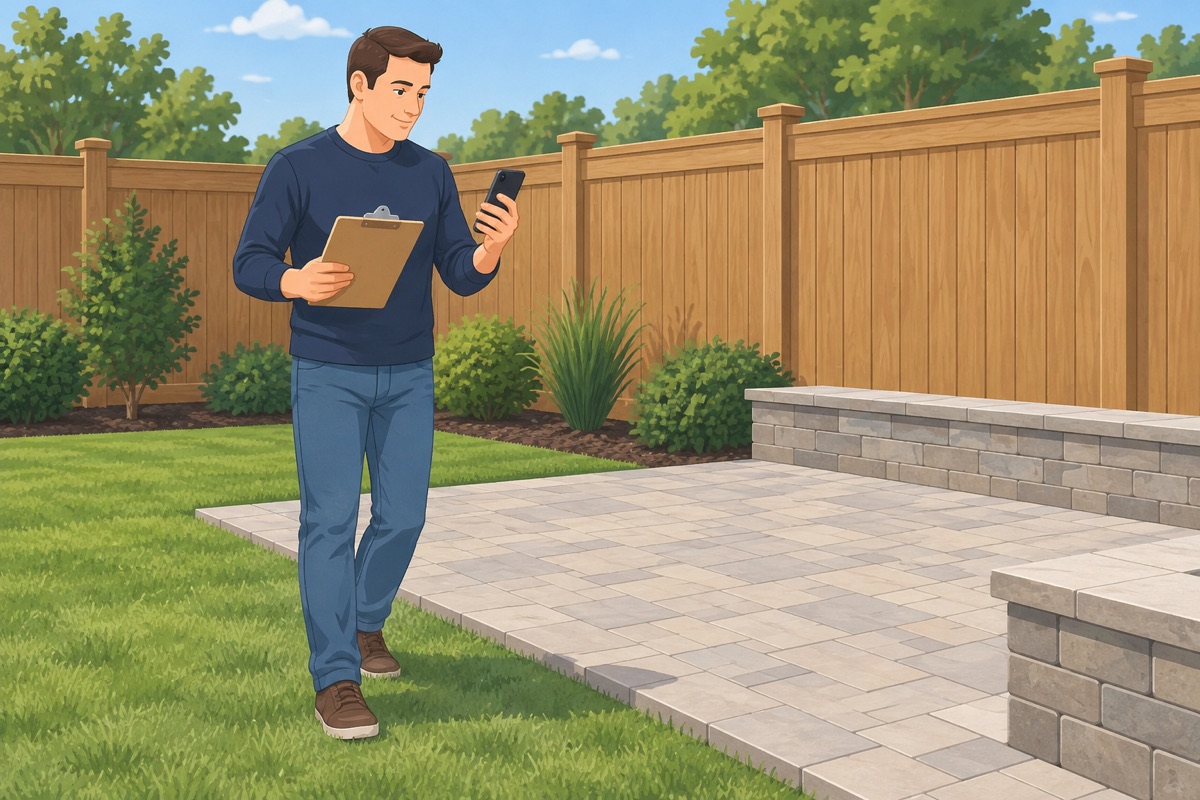
Walk slowly around everything you built or changed, with this list and your phone. Write down anything to fix before you check it off.
Step 2 of 8
Gates, latches, and doors
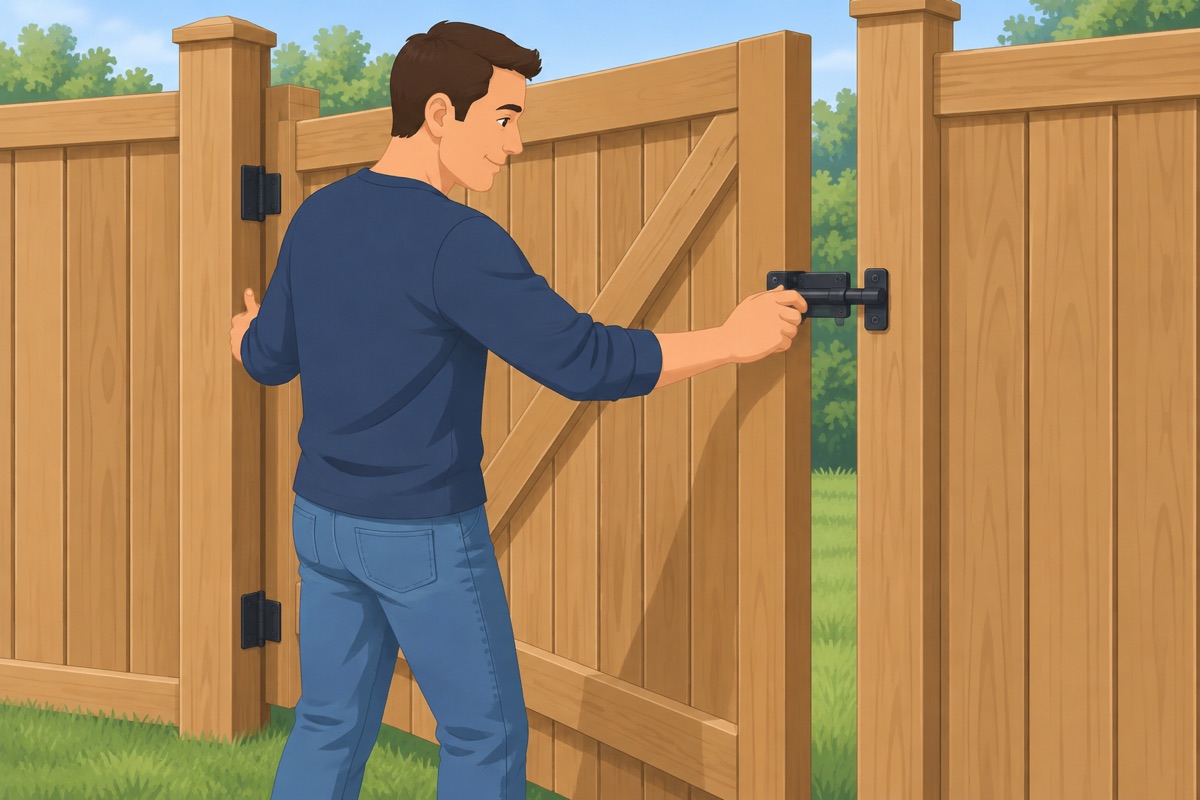
Open and close every gate and exterior door you touched: each swings clear, closes, and latches. A gate that drags or a latch that misses gets adjusted now, while the tools are out.
Step 3 of 8
Water runs away from the house
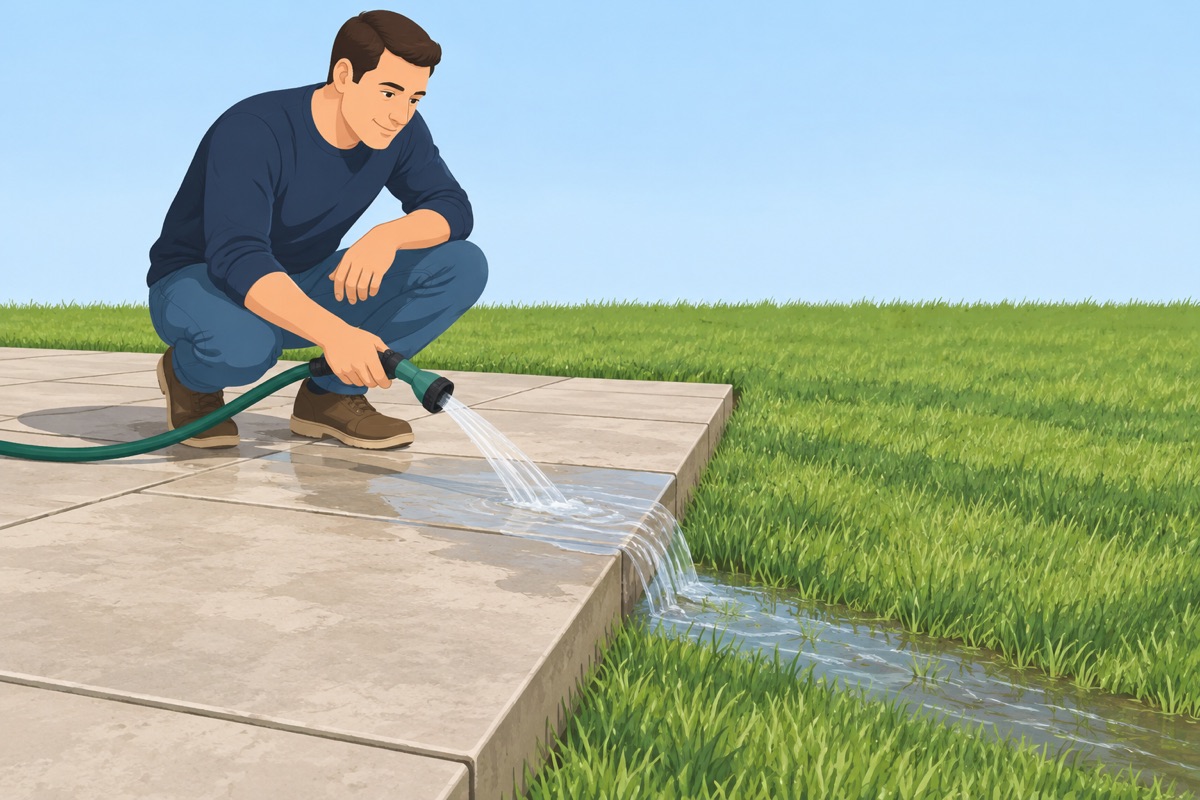
Run a garden hose slowly where you changed the ground, the paving, or the gutters, and watch where the water goes: away from the house, not toward it or under a new patio, step, or walk. Each downspout empties onto a splash block or into a drain that carries the water away.
Step 4 of 8
Lights
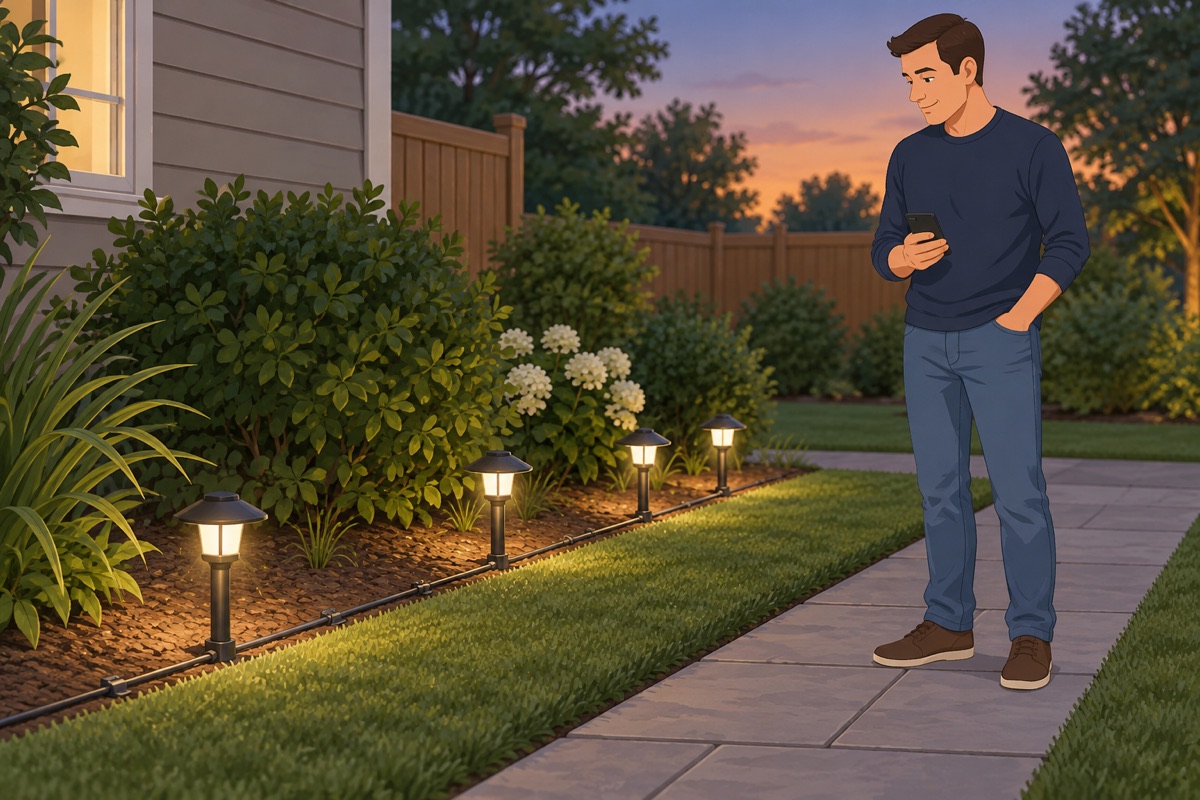
At dusk, switch on every outdoor light you added or changed: each one works from its switch or timer, with no flicker and no tripped breaker or GFCI. Any low-voltage cable stays buried or clipped where its guide put it.
Step 5 of 8
Nails, staples, screws, and offcuts
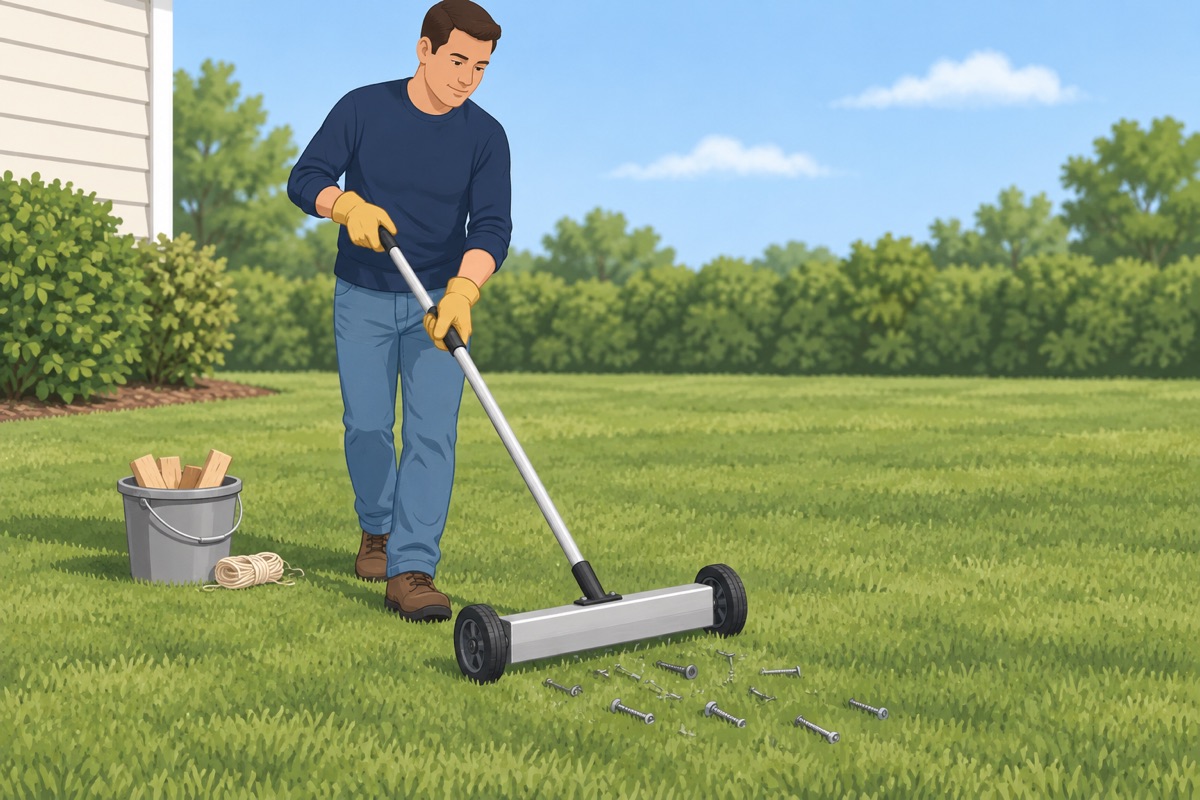
Run the magnetic sweeper over the lawn, the beds, the driveway, and the walks where you worked. Pick up offcuts, stakes, string, and plastic. Check the street side and your neighbour's side too.
Step 6 of 8
Paint and stain touch-ups
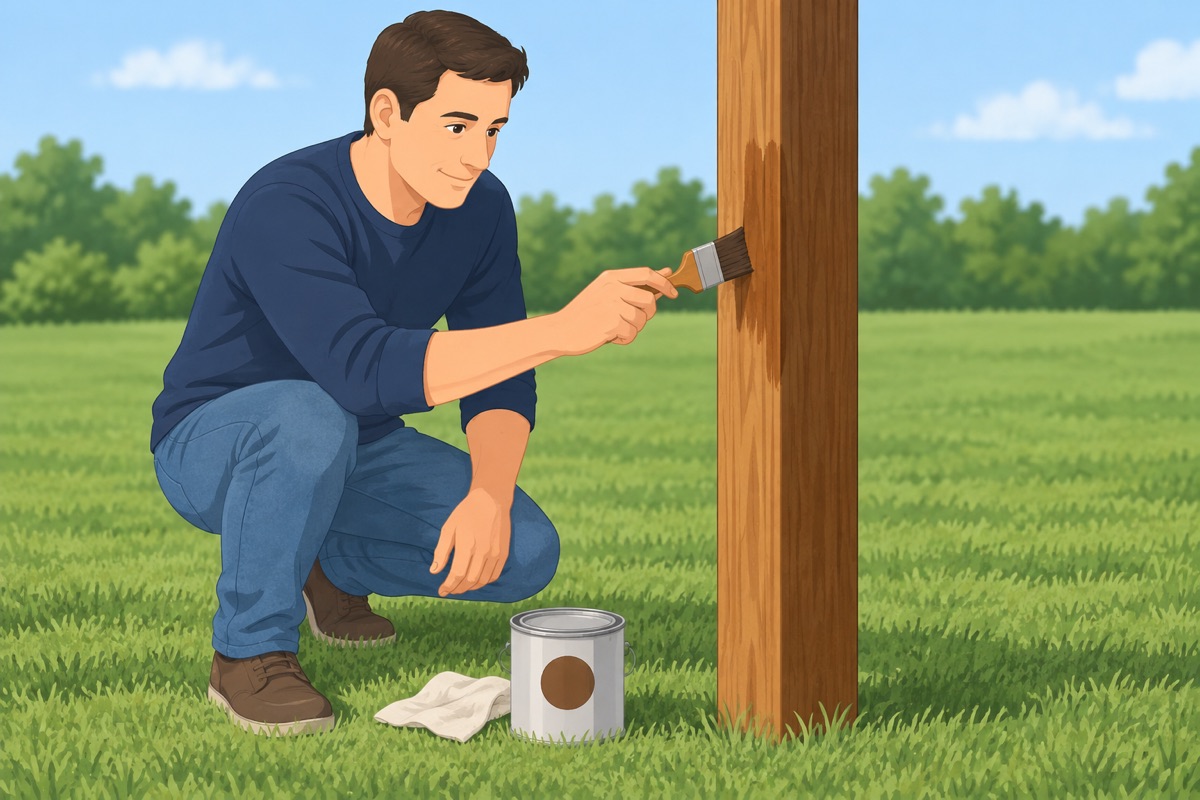
Look at the paint, the stain, and the caulk you put on, in daylight from a few steps back. Touch up scuffs and thin spots with the leftover from the job, as its can says. Label each leftover can with the color and where it went, close it tight, and store it where it will not freeze or bake.
Step 7 of 8
Tools back, rentals returned
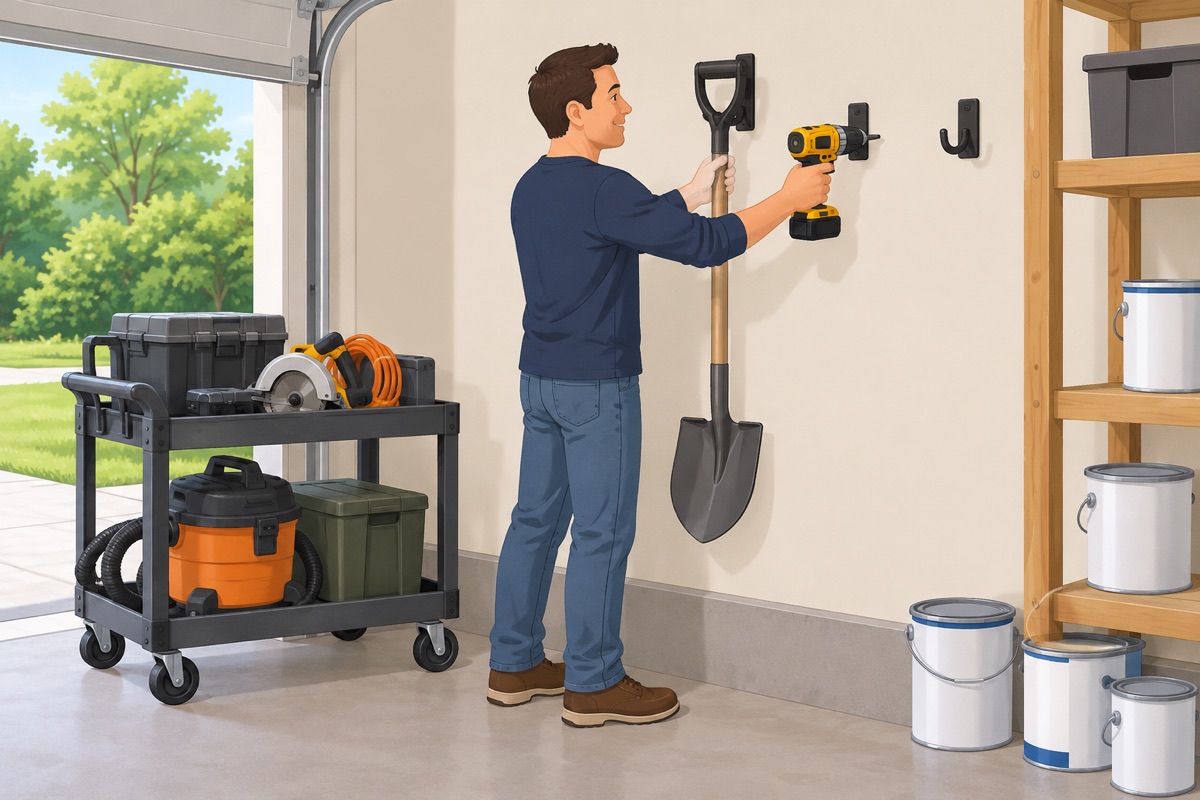
Clean and put away your tools, return rentals on time, and take leftover materials back where the store allows it. Dispose of leftover paint, stain, and concrete the way your city says.
Step 8 of 8
Photos, receipts, and warranties
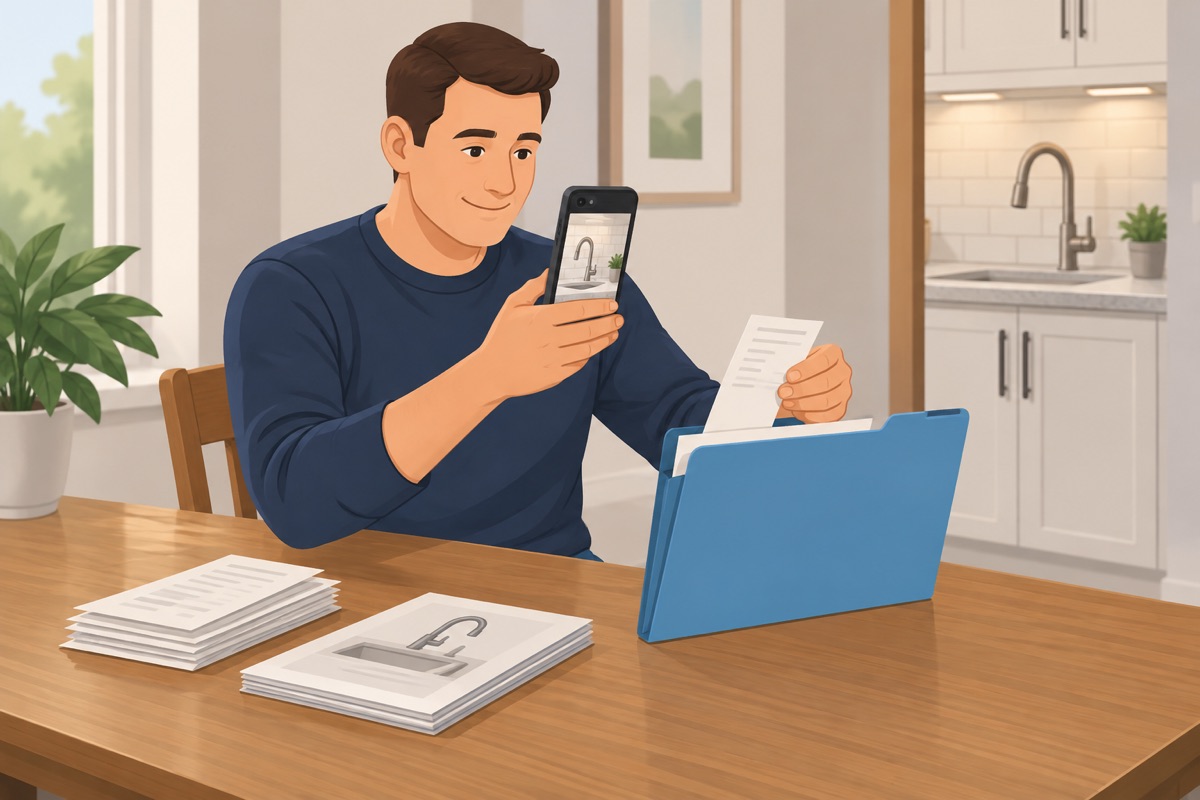
Photograph each finished part from the same spots as your before photos. Put the receipts, the manuals, the warranties, any permit and inspection sign-off, and the paint colors in one folder. Register the products whose warranty asks for it.
Done outside?
- Every gate and exterior door you touched opens, closes, and latches (or you touched none)
- The hose test shows water running away from the house
- Every light you added or changed works, with no tripped breaker or GFCI (or you changed none)
- No nails, staples, screws, or offcuts are left on the lawn, the beds, or the walks
- Touch-ups are done and leftover cans are labeled
- Tools are put away and rentals are returned
- Photos are taken, and the receipts, manuals, warranties, and any permit sign-off are in one folder
Common mistakes
- Skipping the hose test. New paving, a new bed, or a new path can tilt water toward the house, and you only find out in the first storm, in the crawlspace or the garage. Ten minutes with a hose shows it while the tools are still out. Mistake #1 in this task.
- Leaving nails and staples in the lawn. They end up in a tire, a paw, or a bare foot. A magnetic sweeper finds what your eyes miss.
- Throwing the manuals out with the boxes. A warranty claim needs the receipt, the model, and sometimes a registration. Pull the papers out of every box before it goes to recycling.
Questions
What should I check when an outdoor project is finished?
Walk the whole job in daylight with your phone and write down anything to fix before you check it off. Open and close every gate and exterior door you touched, run a hose where you changed the ground, paving or gutters, switch on every light you added at dusk, run a magnetic sweeper over the lawn, beds, driveway and walks, and touch up paint and stain with the leftover from the job.
How do I check that water runs away from the house?
Run a garden hose slowly where you changed the ground, the paving or the gutters, and watch where the water goes: away from the house, not toward it or under a new patio, step or walk. New paving, a new bed or a new path can tilt water toward the house, and you only find out in the first storm; ten minutes with a hose shows it while the tools are still out.
What papers should I keep after an outdoor renovation?
Photograph each finished part from the same spots as your before photos. Put the receipts, manuals, warranties, any permit and inspection sign-off, and the paint colors in one folder, and pull the papers out of every box before it goes to recycling: a warranty claim needs the receipt, the model and sometimes a registration.
When should I stop and call a pro?
If the walk turns up water running toward the house, a post, railing, or step that moves, a light that flickers or trips its breaker, or a paver or a step that rocks or lifts, fix it with the guide for that job or call the trade before you call the outside done.