Get a hot tub installed: pad, power, permit: what a pro does and what you can do
Contractor work. Your part is the site, the pad, the delivery path and a clear electrical bid — then you fill it and test it once the circuit has passed inspection.
Difficulty 5 of 5 · licensed pro
Stop here
Photo of your room, the look you pick, then this guide with the materials counted for your room.
What you need
- Hot tub (the dealer delivers; this line is the one you picked)
- Pad materials (per the tub's spec and your contractor)
- Job folder for bids, permit, and the manual
- Water test strips
Tools
- Tape measure
- 4 ft level
- Phone camera
- Notebook for bid comparison
- Garden hose
Step by step
Step 1 of 10
Accept that the wiring is not yours to do

The dedicated circuit, the GFCI and the disconnect are licensed electrical work. Your part is the site, the pad, the delivery, hiring well, and the fill. Read the stop-gate and confirm you understand it.
Before you go further
- You will not wire, plug in, or power the tub yourself
- You understand this usually needs a permit and an inspection
- You have a place to keep bids, the permit, and the manuals together
Step 2 of 10
Check the rules with your city

Ask your city about the permit, the setback from the property line, and whether you need a locking safety cover or a barrier like a pool's. Ask your HOA if you have one. Write down what they say.
Step 3 of 10
Pick the site

Choose a spot that is level or can be made level, drains away from the house, and is clear of overhead wires — the electrician will confirm the clearances the code requires. A shorter run from the electrical panel makes the circuit cheaper. Leave access to the side where the equipment panel opens, per the tub's manual, and a hose within reach.
Step 4 of 10
Plan the pad

Read the filled weight on the tub's spec sheet (often 4,000–6,000 lb). The pad must be rated for it: usually a concrete slab to the tub maker's spec, or a pad system rated for that weight. On a deck or balcony, get an engineer or a contractor to confirm it first. Any digging for the pad starts with 811.
Step 5 of 10
Measure the delivery path
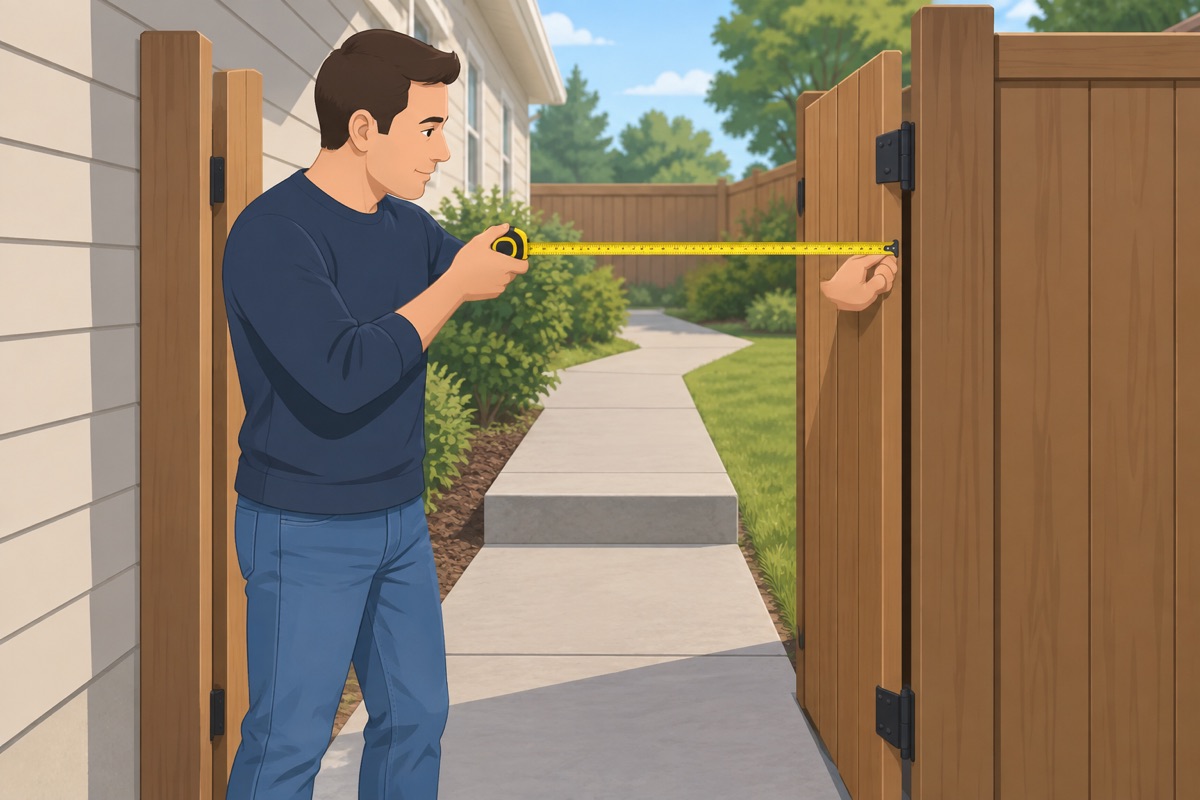
The tub usually travels on its side on a dolly, so its height becomes its width. Measure every gate, turn, step, and overhang from the street to the pad and send the numbers to the dealer. If it will not fit, ask the dealer about a crane before you order.
Step 6 of 10
Get an electrical bid that names every part

Each bid should name a dedicated 240 V circuit sized per the tub's manual, GFCI protection, a disconnect within sight of the tub and at least 5 ft from the water (the code sets the distance — ask the electrician), the wire and conduit, the trench and its depth, patching, and who pulls the permit. Anything not written down is not included.
Step 7 of 10
Check the license and sign a clear contract

Look up each contractor's license with your state's contractor license board (CSLB in California) and ask for proof of insurance. The contract should carry the license number, the scope, the dates and the total. Hold the last payment until the inspection passes.
Step 8 of 10
Wait for the inspection before anything is filled

The electrician finishes the circuit and the city inspects it. Keep the breaker off until the inspection is signed off and the tub is in place on its pad.
Before you fill the tub
- The electrical inspection is signed off
- The tub sits level on a pad rated for its filled weight
- The disconnect is within sight of the tub
- The breaker is off
Step 9 of 10
Fill it, power it, test the GFCI

Fill through the filter well with a hose to the level the manual gives, using a hose filter if it asks for one. Only then switch the breaker on. Press the GFCI test button as the manual says: the power must cut off. Reset it, check every fitting for leaks, and balance the water with test strips per the manual.
Step 10 of 10
Lock the cover and close the job
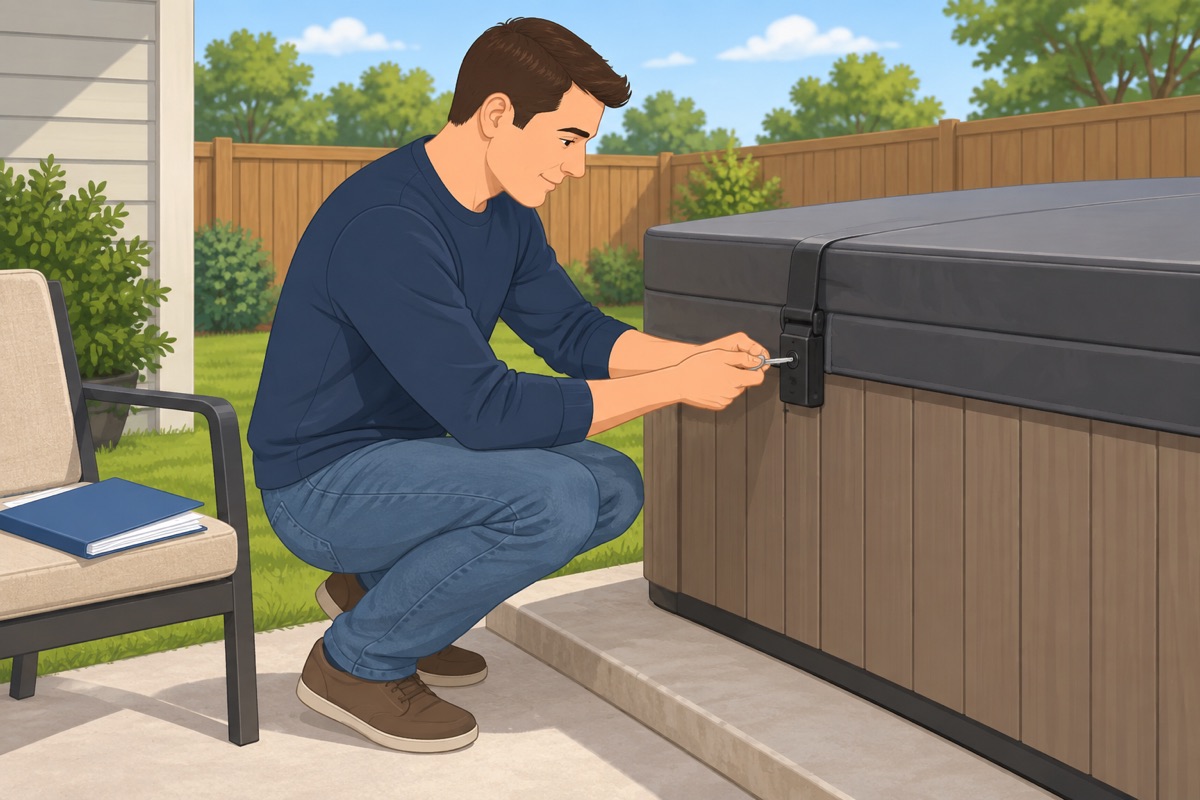
Lock the safety cover whenever the tub is not in use. Put the monthly GFCI test from the manual on your calendar, and keep the permit, the spec sheet, the manuals and the warranty in the job folder.
Before the final payment
- License and insurance checked before signing
- The bid named the circuit, GFCI, disconnect, trench and permit
- The inspection is signed off
- The GFCI cut the power when you tested it
- The cover locks
Common mistakes
- Wiring it yourself or plugging it into an outdoor outlet. Water and 240 V is how people die in hot tubs. The circuit, the GFCI and the disconnect are the electrician's job, with a permit. Mistake #1 in this task.
- Setting a tub on a deck or balcony without an engineer. A filled tub with people in it can weigh as much as a car, on a much smaller footprint. Only an engineer or a contractor can say a deck carries it.
- Not measuring the delivery path. The tub arrives, and it does not fit through the side gate. Measure every gate, turn and step before you order.
- An electrical bid that just says "hook up hot tub". The circuit size, GFCI, disconnect, trench, conduit and permit are separate items. If the bid does not name them, ask in writing.
- Turning the power on before the tub is full. The heater and pump can burn out running dry. Fill to the level the manual gives, then switch on.
Draft guide written from standard practice, not yet reviewed by a licensed pro. Follow product labels where they differ.
Get this job planned for your roomRelated guides
- How to install a closet system yourself: step by step
- How to install cabinet pulls, door handles and shelves yourself: step by step
- How to install a faucet, toilet and shower head yourself: step by step
- How to replace outlets, switches and light fixtures yourself: step by step
- How to connect a dishwasher, range and hood yourself: step by step
- Gas range connection: what a pro does and what you can do